Maiko National Park Dr Congo Safari Travel Guide
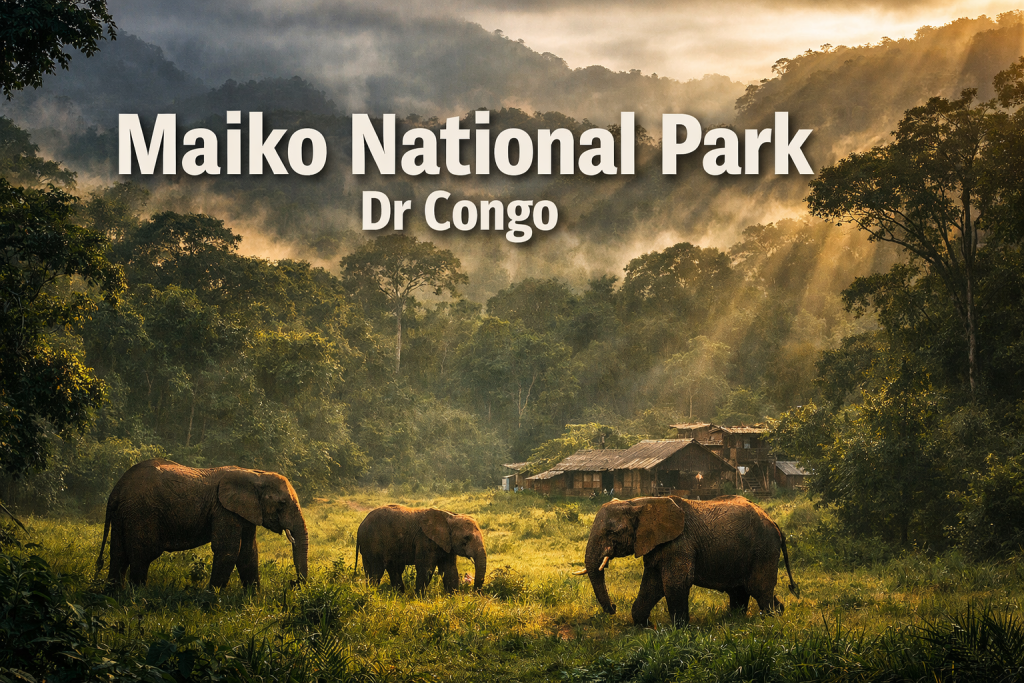
Maiko National Park Dr Congo covers 2.7 million acres of montane and lowland rainforest in eastern Democratic Republic of the Congo, located across portions of Maniema, North Kivu, and South Kivu provinces. The park protects populations of Grauer’s gorillas, African forest elephants, okapi, chimpanzees, and other rainforest species within one of Central Africa’s most remote conservation areas. Access to Maiko National Park remains restricted in 2026 due to ongoing armed conflict, limited infrastructure, and active conservation operations that prioritize ranger safety over tourism development.
Maiko National Park spans 2.7 million acres of Congo rainforest protecting Grauer’s gorillas and African forest elephants. The park remains closed to general tourism in 2026 due to armed conflict and security concerns affecting eastern DRC. Rangers continue protection work despite displacement of over 500,000 people in South Kivu province alone. Conservation efforts focus on establishing wildlife corridors and community forests totaling 316,294 acres to connect Maiko with Okapi Wildlife Reserve. Visitors planning Congo wildlife travel should consider accessible alternatives like Virunga National Park or Kahuzi-Biega National Park until security conditions improve.
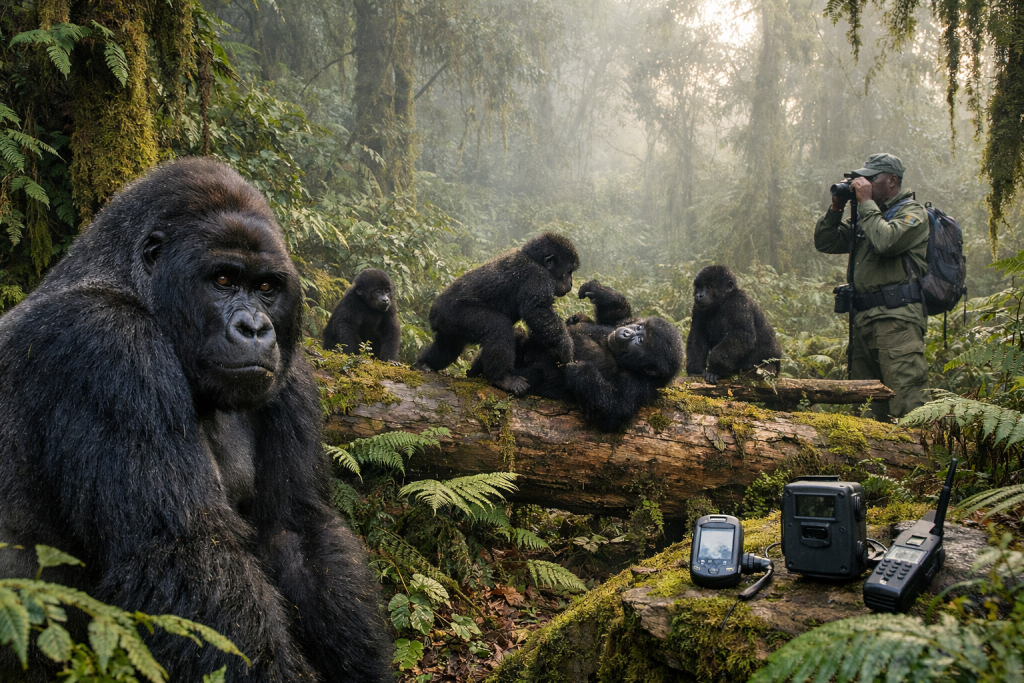
Maiko National Park Dr Congo is not open for tourism visits in 2026. Armed conflict involving M23 rebel groups and other factions has made the region dangerous for both rangers and potential visitors. The park operates as a protected conservation area with ranger patrols continuing wildlife protection work, but no tour operators currently offer trips to Maiko National Park. Travelers interested in gorilla trekking or Congo rainforest wildlife should book trips to Virunga National Park for mountain gorillas or Kahuzi-Biega National Park for eastern lowland gorillas, both of which maintain controlled visitor access with security protocols.
Maiko National Park Location and Geography
Maiko National Park sits in the central Congo Basin rainforest, straddling three provinces in eastern DRC. The park boundaries extend across Maniema, North Kivu, and South Kivu, positioned between the more accessible Virunga National Park to the east and Okapi Wildlife Reserve to the north.
The terrain consists of dense montane rainforest at higher elevations transitioning to lowland tropical forest in river valleys. Elevation ranges from approximately 500 meters in lowland sections to over 2,000 meters in mountainous areas. The Luka and Ulindi rivers flow through the park, creating important water sources for wildlife populations.
Road access to Maiko National Park remains extremely limited. No paved roads reach park boundaries, and the few existing tracks become impassable during rainy seasons. The nearest town with basic services is Lubutu in Maniema province, accessible only by small aircraft or multi-day overland travel from Kisangani.
Wildlife Species in Maiko National Park Dr Congo
Maiko National Park protects several threatened primate and mammal species found nowhere else in accessible numbers. Grauer’s gorillas, also called eastern lowland gorillas, represent the park’s most significant primate population, though exact numbers remain uncertain due to limited survey access.
African forest elephants move through the park in small family groups, using established migration routes between Maiko and northern forest areas. These elephants are smaller than savannah elephants and have straighter tusks adapted for forest movement. Poaching pressure increased in areas where ranger patrols cannot operate safely due to armed groups.
Okapi populations inhabit the northern sections of Maiko National Park. These forest giraffids require dense vegetation and have been documented in camera trap surveys conducted by ranger teams. Chimpanzee communities live throughout the park’s forest zones, with vocalizations regularly heard during ranger patrols.
Other mammals include giant ground pangolins, forest buffalo, bongo antelope, and several duiker species. The park supports over 300 bird species, including African grey parrots, which face illegal capture for wildlife trade.
Conservation Work and Ranger Operations
Rangers stationed at Maiko National Park continue protection patrols despite active conflict in surrounding areas. A small team has maintained presence at park headquarters, with some rangers choosing to stay at their posts even as over 500,000 people were displaced from South Kivu province.
Ranger patrols have documented success in reducing poaching activities in areas they can access safely. Local communities have sought refuge at ranger stations due to increased security provided by conservation teams.[2] The presence of armed rangers discourages illegal hunting and logging in patrol zones.
Anti-poaching operations identified illegal logging and charcoal production activities that generated an estimated 213,227 tons of CO2 emissions. Total value of seizures from confiscated illegal products reached approximately $11,227,857, with many items destined for Asian markets.
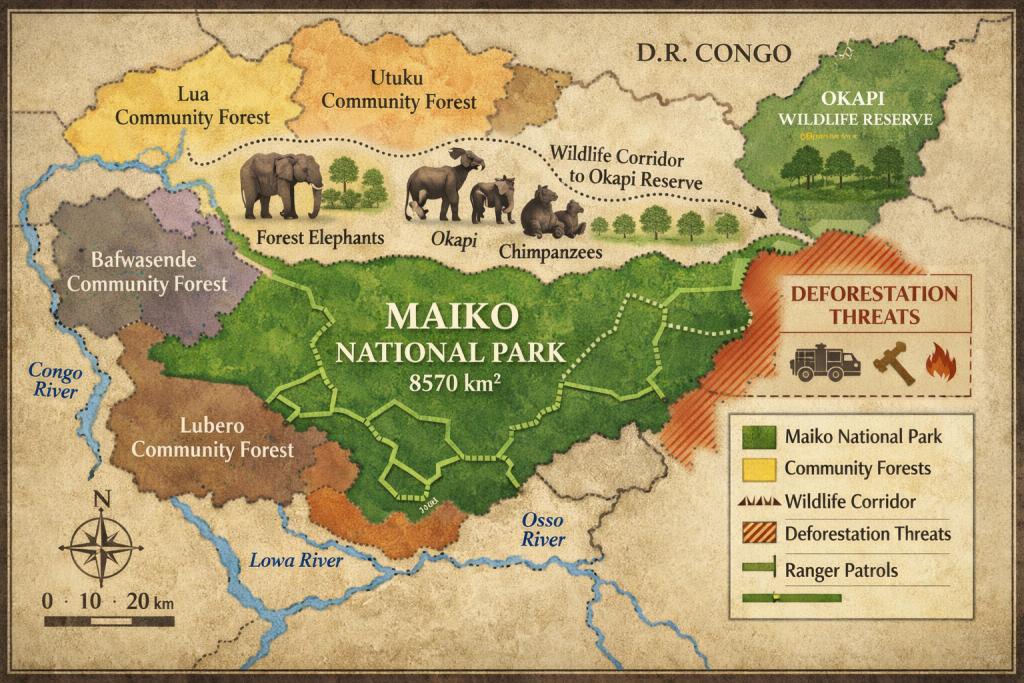
Conservation organizations working in the region include Rainforest Trust, which has partnered with Bambuti Indigenous communities since 2014 to establish eight Community Forests totaling 316,294 acres north of Maiko. These community-managed areas create a buffer zone blocking deforestation advancing from mining and road development to the east.
Security Situation and Access Restrictions
Armed conflict in eastern DRC has intensified around Maiko National Park since the resurgence of M23 rebel forces and other armed factions. This ongoing violence has made ranger work significantly more dangerous and eliminated any possibility of tourist visits.
The conflict has displaced populations across North Kivu and South Kivu provinces, with armed groups controlling territory near park boundaries. Rangers face direct threats from militias involved in illegal resource extraction, including timber harvesting, charcoal production, and wildlife poaching.
No tour operators offer trips to Maiko National Park in 2026. The security situation prevents the establishment of tourist infrastructure, guided treks, or wildlife viewing activities. Travelers attempting to reach the park would face extreme personal risk from armed groups, lack of medical facilities, and absence of communication infrastructure.
The DRC government has issued oil and gas exploration permits covering portions of Maiko National Park and nearby Virunga National Park, adding uncertainty about future conservation priorities.These permits overlap with critical habitat for Grauer’s gorillas and other threatened species.
Wildlife Corridor Conservation Projects
Conservation efforts focus on connecting Maiko National Park with Okapi Wildlife Reserve to the north through a protected wildlife corridor. This corridor would link 2.7 million acres of Maiko habitat with 3.4 million acres of Okapi Reserve, creating continuous protected forest for wide-ranging species like elephants, okapi, and chimpanzees.
The Community Forests established north of Maiko serve as the first components of this corridor strategy. Bambuti Indigenous communities manage these 316,294 acres under agreements that prevent commercial logging and mining while allowing traditional forest use.
New roads and mining operations continue advancing toward Maiko from the eastern boundary, driving rapid deforestation that threatens corridor connectivity.Conservation organizations monitor this encroachment using satellite imagery and ranger ground surveys.
A $2.5 billion pledge announced in November 2025 during the COP30 U.N. climate conference aims to conserve Congo Basin forests through the Belém Call to Action for the Congo Basin Forests.[4] Implementation of this funding could support corridor protection and ranger operations if security conditions allow.
Alternative Congo Rainforest Safari Destinations
Travelers planning Congo wildlife trips should consider parks with established visitor programs and functional security protocols. Virunga National Park in North Kivu province offers mountain gorilla trekking permits when security assessments allow visits. The park maintains trained ranger teams and tourist infrastructure including lodges and guided trek services.
Kahuzi-Biega National Park protects eastern lowland gorillas, the same species found in Maiko but with habituated family groups accessible to visitors. The park operates gorilla trekking programs with permit systems similar to Rwanda and Uganda. Treks require moderate fitness levels and last between two to six hours depending on gorilla location.
Salonga National Park in central DRC represents Africa’s largest tropical rainforest reserve but also lacks tourist infrastructure. The park remains primarily a research and conservation area without regular visitor access.
Garamba National Park in northeastern DRC protects savannah and woodland habitat with different species assemblages including northern white rhinos, though this population may be extinct. Security concerns also affect Garamba access.
Permit Requirements and Booking Information
Maiko National Park does not issue visitor permits or accept tourism bookings in 2026. The park operates as a protected conservation area without tourist facilities, habituated wildlife groups, or authorized guide services.
For visitors interested in similar Congo rainforest wildlife experiences, Virunga National Park gorilla trekking permits cost $400 per person per trek when available. Kahuzi-Biega National Park charges $400 for eastern lowland gorilla permits. Both parks require advance booking through official channels or licensed tour operators.
DRC visa requirements apply to all international visitors. Tourist visas must be obtained before arrival, as visa-on-arrival services are not reliably available. Yellow fever vaccination certificates are mandatory for entry to Democratic Republic of the Congo.
Travel insurance covering emergency medical evacuation is necessary for any DRC travel. Standard policies often exclude conflict zones, so specialized coverage may be required depending on destination within the country.
Best Time for Congo Rainforest Travel
Congo Basin rainforest experiences rainfall throughout the year, with two relatively drier periods from December to February and June to August. These months offer better conditions for forest trekking and wildlife tracking when trails are less muddy and river crossings are safer.
Rainfall peaks from March to May and September to November, making forest access extremely difficult. Roads become impassable, and trekking conditions deteriorate significantly. Wildlife viewing does not improve during dry periods, as rainforest animals remain active year-round regardless of season.
Temperature remains consistent throughout the year in lowland rainforest areas, ranging from 23 to 28 degrees Celsius. Montane forest zones at higher elevations experience cooler temperatures, particularly at night when temperatures can drop to 15 degrees Celsius.
For parks that accept visitors, dry season months see higher tourist numbers and may require earlier permit booking. Rainy season visits offer fewer crowds but present logistical difficulties that can disrupt itineraries.
Congo Rainforest Safari Planning Considerations
Travelers planning trips to accessible Congo parks should work with specialized tour operators experienced in DRC logistics. These operators handle permit applications, security assessments, ground transportation, and communication with park authorities.
Medical preparation requires yellow fever vaccination, malaria prophylaxis, and consultation with travel health specialists familiar with Central African disease risks. Rabies vaccination is recommended for travelers spending extended time in remote areas.
Physical fitness requirements for gorilla trekking vary by park and gorilla group location. Treks can involve steep terrain, dense vegetation, and multiple hours of hiking at elevation. Age restrictions typically set minimum ages at 15 years for gorilla permits.
Communication infrastructure in eastern DRC remains limited. Mobile phone coverage is unreliable outside major towns, and internet access is sporadic. Satellite communication devices provide the most reliable contact option for remote areas.
Banking services and ATM access are limited in eastern DRC. Visitors should carry sufficient US dollars in good condition, as damaged or old bills may be rejected. Credit cards are rarely accepted outside major hotels in Goma or Kinshasa.
FAQ
Can tourists visit Maiko National Park in 2026?
No. Maiko National Park is closed to tourism due to armed conflict and security threats in eastern DRC. No tour operators offer trips to the park, and no visitor facilities exist.
What gorilla species live in Maiko National Park?
Grauer’s gorillas, also called eastern lowland gorillas, inhabit Maiko National Park. These are the same species found in Kahuzi-Biega National Park, where habituated groups can be visited.
How large is Maiko National Park Dr Congo?
The park covers 2.7 million acres of montane and lowland rainforest across Maniema, North Kivu, and South Kivu provinces in eastern Democratic Republic of the Congo.
Are there rangers protecting Maiko National Park?
Yes. A small team of rangers continues protection patrols despite conflict conditions. These rangers have maintained presence at park headquarters and conduct anti-poaching operations in accessible areas.
What other animals live in Maiko besides gorillas?
The park protects African forest elephants, okapi, chimpanzees, giant ground pangolins, forest buffalo, bongo antelope, and over 300 bird species including African grey parrots.
Where can travelers see Congo rainforest gorillas?
Virunga National Park offers mountain gorilla trekking when security permits. Kahuzi-Biega National Park provides access to eastern lowland gorillas through permitted trekking programs.
How do I get to Maiko National Park?
There is no safe or legal access to Maiko National Park for tourists. The nearest town is Lubutu, accessible only by small aircraft or multi-day overland travel through insecure areas.
What is the security situation around Maiko National Park?
Armed conflict involving M23 rebels and other factions has displaced over 500,000 people in South Kivu province alone. The area remains dangerous for both rangers and any potential visitors.
Are there hotels or lodges in Maiko National Park?
No tourist accommodation exists in or near Maiko National Park. The park operates as a protected conservation area without visitor infrastructure.
What conservation projects support Maiko National Park?
Rainforest Trust and partners have established eight Community Forests totaling 316,294 acres north of Maiko to create wildlife corridors connecting the park to Okapi Wildlife Reserve.
How much does it cost to visit Maiko National Park?
Maiko does not issue permits or accept visitors. For alternative Congo gorilla trekking, Virunga and Kahuzi-Biega charge $400 per person per trek.
When will Maiko National Park open to tourists?
No timeline exists for opening Maiko to tourism. Security conditions must improve significantly, and visitor infrastructure would need to be developed before any tourism program could begin.
Key Takeaways
Maiko National Park Dr Congo protects 2.7 million acres of critical rainforest habitat for Grauer’s gorillas, African forest elephants, and okapi across three provinces in eastern DRC.
The park remains closed to all tourism in 2026 due to armed conflict involving M23 rebels and other factions that has displaced over 500,000 people in South Kivu province alone.
Rangers continue wildlife protection work despite security threats, successfully reducing poaching in patrol areas and providing security that has drawn displaced communities to ranger stations.
Conservation efforts focus on establishing wildlife corridors through Community Forests totaling 316,294 acres that connect Maiko with Okapi Wildlife Reserve to the north.
Illegal logging and resource extraction continue in areas rangers cannot safely access, with seizures valued at approximately $11.2 million and estimated CO2 emissions of 213,227 tons from illegal activities.
Travelers interested in Congo gorilla trekking should book trips to Virunga National Park for mountain gorillas or Kahuzi-Biega National Park for eastern lowland gorillas, both offering controlled visitor access.
A $2.5 billion pledge for Congo Basin forest conservation announced at COP30 in November 2025 may support future protection efforts if implementation proceeds and security improves.
No tour operators offer Maiko National Park trips, no permits are issued, and no visitor infrastructure exists at the park in 2026.
Physical access to Maiko requires multi-day overland travel or small aircraft to remote areas without services, medical facilities, or communication infrastructure.
The DRC government has issued oil and gas exploration permits covering portions of Maiko National Park, creating uncertainty about long-term conservation priorities for this protected area.