Add YoKahuzi-Biega National Park Dr Congo Wildlife Safaris and Gorilla Trekking Toursur Heading Text Here
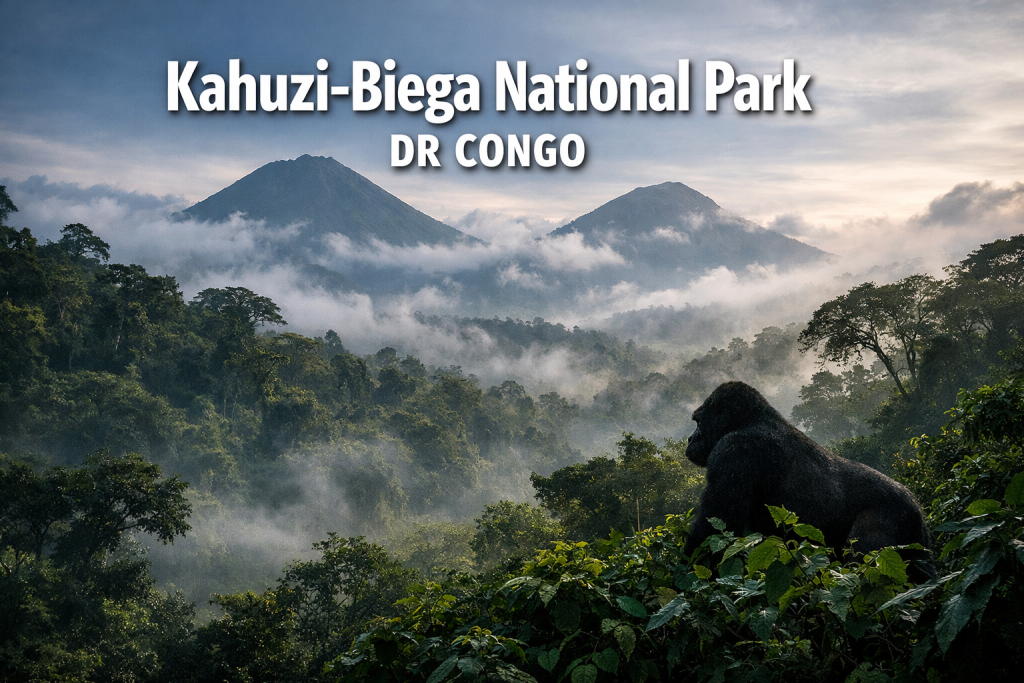
Kahuzi-Biega National Park Dr Congo is a 600,000-hectare UNESCO World Heritage Site in eastern Democratic Republic of Congo, protecting the world’s largest remaining population of Critically Endangered Grauer’s gorillas. The park extends across primary montane rainforest dominated by two extinct volcanoes, Mount Kahuzi at 3,308 meters and Mount Biega at 2,790 meters, located west of Bukavu in South Kivu province. Visitors travel to Kahuzi-Biega National Park primarily for gorilla trekking safaris focused on habituated Grauer’s gorilla families, with access managed through the Institut Congolais pour la Conservation de la Nature (ICCN) and international conservation partners including the Wildlife Conservation Society.
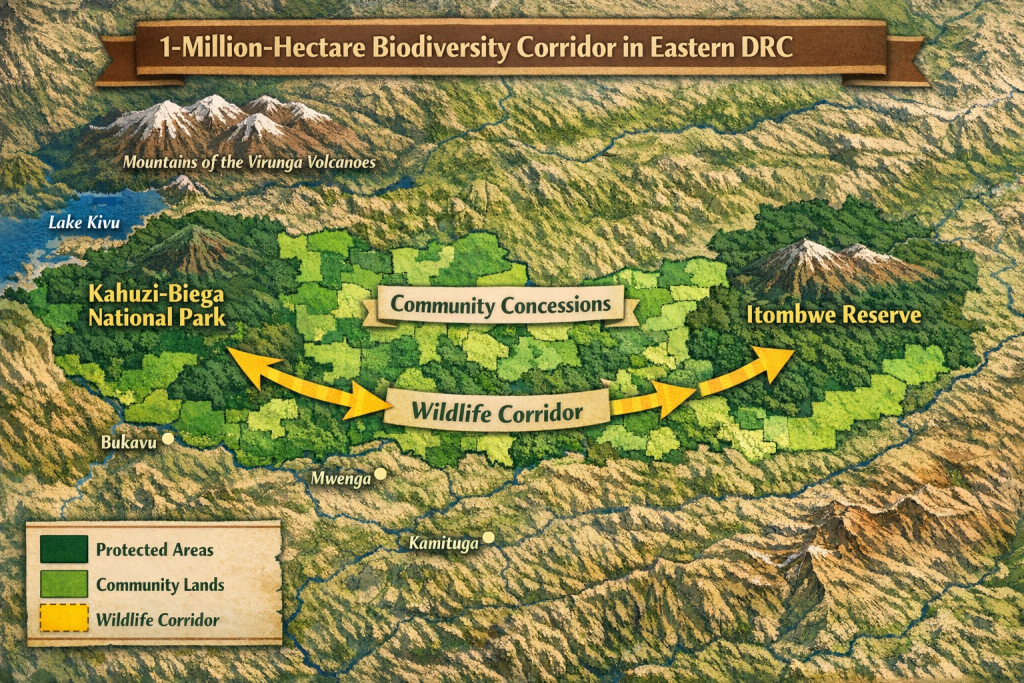
Kahuzi-Biega National Park Dr Congo covers 600,000 hectares of montane rainforest protecting Grauer’s gorillas between two volcanic peaks. Gorilla trekking permits are arranged through ICCN with tours departing from Bukavu. The park operates under a 2022 Public Private Partnership between ICCN and Wildlife Conservation Society focusing on community-based conservation. Security conditions in 2026 allow controlled tourist access to highland zones with daily ranger patrols. A 1-million-hectare biodiversity corridor linking Kahuzi-Biega to Itombwe Reserve is more than halfway complete with 23 community forest concessions secured.
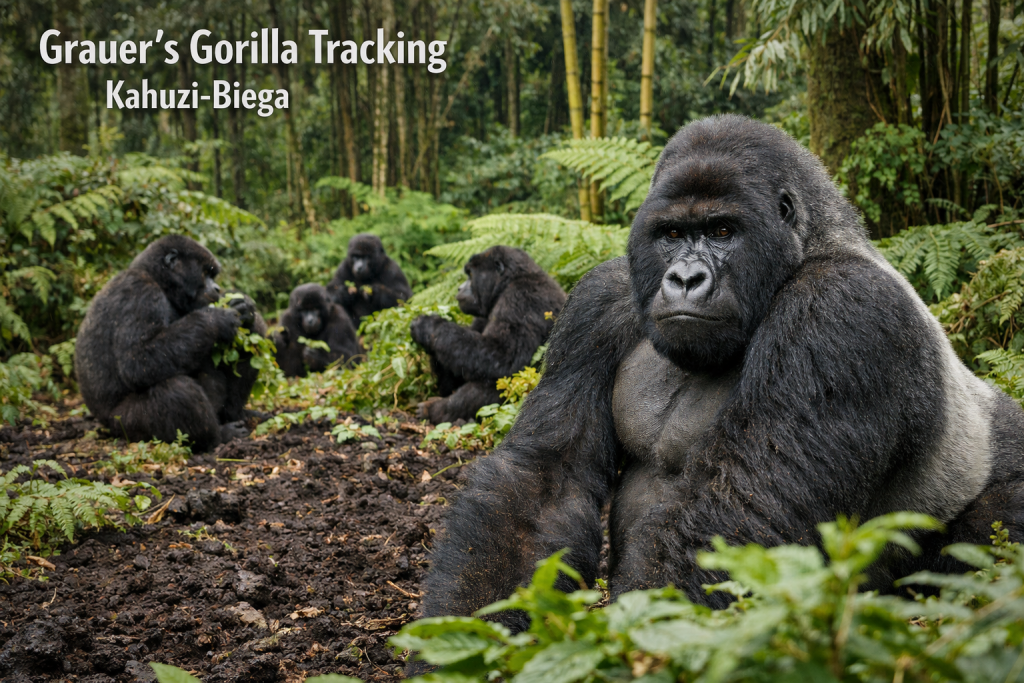
Kahuzi-Biega National Park Dr Congo functions as a managed conservation area protecting the single largest population of endemic Grauer’s gorillas, with tourist activities concentrated in the highland sector accessible from Bukavu. Visitors require gorilla trekking permits issued by ICCN, with treks lasting 2 to 6 hours depending on gorilla group location. The park operates year-round with dry seasons from June to September and December to February offering better trekking conditions on volcanic terrain. Security protocols limit access to patrolled highland zones while lowland forest areas remain restricted due to armed group activity in eastern DRC.
Kahuzi-Biega National Park Location and Geography
Kahuzi-Biega National Park Dr Congo sits in South Kivu province approximately 50 kilometers west of Bukavu town, which serves as the primary entry point for visitors. The park spans from 900 meters elevation in lowland rainforest to 3,308 meters at the summit of Mount Kahuzi.
The protected area divides into highland and lowland sectors separated by a corridor of human settlement. Highland zones contain montane forest, bamboo stands, and subalpine vegetation on volcanic slopes. Lowland areas extend across dense primary rainforest with swamp forest and riparian zones along waterways.
Road access from Bukavu to park headquarters at Tshivanga takes 1.5 to 2 hours on unpaved roads requiring 4×4 vehicles. The highland sector receives tourist visits while lowland zones remain closed to visitors due to security restrictions and limited ranger presence.
Grauer’s Gorilla Population and Conservation Status
The park protects the world’s single largest remaining population of Grauer’s gorillas, also called eastern lowland gorillas, classified as Critically Endangered by international conservation assessments. Population estimates fluctuate based on survey coverage and security access to different park zones.
Grauer’s gorillas exist only in eastern DRC forests, making Kahuzi-Biega National Park critical to species survival. These gorillas are larger than mountain gorillas, with silverback males reaching 250 kilograms. Groups typically contain 5 to 30 individuals led by a dominant silverback.
The Wildlife Conservation Society entered a Public Private Partnership with ICCN in 2022 to manage park operations, directing investments toward community development, education, health services, and economic opportunities for local Batwa and other communities. This management model aims to reduce human-wildlife conflict and extractive pressures on forest resources.
Gorilla Trekking Safaris at Kahuzi-Biega National Park Dr Congo
Gorilla trekking represents the primary tourist activity at Kahuzi-Biega National Park, with visitors tracking habituated Grauer’s gorilla families in highland montane forest. ICCN maintains several habituated groups available for tourism, though exact numbers vary based on group stability and ranger monitoring capacity.
Treks begin at Tshivanga park headquarters between 7:00 and 8:00 AM with mandatory briefings covering gorilla behavior, safety protocols, and visitor regulations. Trek duration ranges from 2 to 6 hours depending on gorilla group location, with terrain including steep volcanic slopes, bamboo thickets, and dense undergrowth.
Visitors are permitted one hour with gorillas once located, maintaining a minimum distance of 7 meters from all individuals. Group size is limited to 8 visitors per gorilla family per day to minimize stress and disease transmission risk. Physical fitness requirements are moderate to high due to altitude, terrain steepness, and unpredictable trek length.
Permits must be arranged in advance through licensed tour operators working with ICCN, as walk-in permit purchases are not reliably available. Permit costs and booking procedures change periodically based on park management decisions and conservation funding needs.
Security Conditions for Tourism at Kahuzi-Biega National Park 2026
Security at Kahuzi-Biega National Park Dr Congo in 2026 allows controlled tourist access to highland zones under specific conditions managed by ICCN and security partners. Armed conflict between DRC government forces and M23 armed groups in eastern DRC continues to affect regional stability, though tourist areas receive daily ranger patrols to prevent armed group access.
Bukavu remains the secure entry point for visitors, with tour operators coordinating with park authorities on daily security assessments before authorizing treks. Highland sector access is maintained through joint ranger and military patrols establishing secure perimeters around tourist zones.
Lowland forest sectors remain closed to tourism due to persistent armed group presence and limited ranger capacity to patrol extensive remote areas. Visitors should not attempt independent travel to park areas outside official tour arrangements.
Tour operators with current ground operations in South Kivu provide real-time security updates and cancellation policies reflecting changing conditions. Travel insurance covering evacuation and trip cancellation due to security incidents is required for all visitors.
Biodiversity Corridor Initiative Connecting Kahuzi-Biega and Itombwe
Strong Roots Congo is creating a 1-million-hectare biodiversity corridor spanning between Kahuzi-Biega National Park and Itombwe Nature Reserve, with the project more than halfway toward completion as of December 2025. This initiative has secured 23 community forest concessions covering nearly 600,000 hectares of land.
The corridor connects protected areas geographically and ecologically, enabling species migration and genetic exchange between isolated populations. Park director Arthur Kalonji states the initiative connects sites “not only geographically, but also in terms of biodiversity”.
Community-based conservation forms the corridor’s foundation, with Indigenous Batwa and other local communities receiving land tenure rights and conservation management roles. This model addresses historical displacement caused when colonial authorities created the park more than 50 years ago, excluding communities who had lived in and managed forest areas for centuries.
The corridor faces challenges from armed conflict in eastern DRC, which has slowed progress and displaced thousands of people from project areas. Political instability between government forces and armed groups continues to affect conservation operations and community security.
Wildlife Species Beyond Grauer’s Gorillas
Kahuzi-Biega National Park Dr Congo protects diverse mammal, bird, and plant species across montane and lowland forest zones. Large mammals include eastern chimpanzees, forest elephants, bush pigs, and multiple duiker species. Primate diversity includes several monkey species adapted to different forest strata and vegetation types.
Bird populations exceed 350 recorded species, with montane specialists occurring in highland zones and lowland rainforest species in lower elevation sectors. Endemic and range-restricted species attract specialized birding tours during dry season months when visibility improves.
Plant communities vary by elevation, with lowland rainforest dominated by large emergent trees, mid-elevation zones containing mixed forest types, and highland areas featuring bamboo stands and subalpine vegetation. The park protects primary forest that has never been commercially logged, maintaining intact ecosystem structure.
Wildlife viewing beyond gorilla trekking is limited due to dense forest cover and restricted access to lowland zones. Visitors should not expect open savannah game viewing conditions common in East African parks.
Best Time to Visit Kahuzi-Biega National Park for Gorilla Trekking
Kahuzi-Biega National Park Dr Congo operates gorilla trekking year-round, with dry seasons from June to September and December to February offering better trekking conditions. Dry months reduce mud on steep volcanic slopes and improve visibility in dense vegetation.
Wet seasons from March to May and October to November bring heavy rainfall making trails slippery and increasing trek difficulty. Rain can occur any month at high elevation, requiring waterproof gear regardless of season.
Temperature varies by elevation, with highland zones experiencing cool conditions year-round. Morning temperatures at Tshivanga headquarters range from 10 to 15 degrees Celsius, warming to 20 to 25 degrees by midday. Visitors should pack layered clothing for altitude and changing conditions during treks.
Gorilla habituation status and group location change throughout the year based on natural ranging behavior and food availability. Permit availability depends on habituated group numbers and tourist demand, with advance booking recommended during peak months of June through September.
Accommodation Options Near Kahuzi-Biega National Park
Accommodation for Kahuzi-Biega National Park visitors is based in Bukavu, with limited options near park boundaries. Bukavu offers hotels and guesthouses ranging from budget to midrange standards, with few properties meeting international luxury classifications.
Properties closest to park headquarters reduce morning travel time to trek starting points. Most tour operators arrange accommodation as part of gorilla trekking packages, coordinating logistics between Bukavu hotels and park access.
Facilities within the park itself are limited to ranger stations and research camps not available for tourist accommodation. Visitors return to Bukavu after daily activities rather than staying overnight near trekking zones.
Booking accommodation through tour operators with current ground operations ensures properties meet basic safety and security standards. Independent travelers should verify accommodation security measures and proximity to secure areas of Bukavu before arrival.
Visitor Regulations and Permit Requirements
All visitors to Kahuzi-Biega National Park Dr Congo require permits issued by ICCN, arranged through licensed tour operators or directly with park authorities. Gorilla trekking permits include park entry, ranger guides, and one hour with a habituated gorilla family.
Age restrictions prohibit children under 15 years from gorilla trekking due to safety concerns and disease transmission risks. Visitors showing symptoms of respiratory illness, open wounds, or communicable diseases are not permitted to track gorillas on the day of their trek.
Regulations during gorilla viewing include maintaining 7-meter minimum distance, no flash photography, speaking in low voices, and following ranger instructions at all times. Eating, drinking, and smoking are prohibited within 200 meters of gorillas.
Maximum group size is 8 visitors per gorilla family per day, with trek duration limited to one hour once gorillas are located. Visitors who cannot complete treks due to fitness limitations or health issues do not receive permit refunds.
Getting to Kahuzi-Biega National Park from Major Cities
Access to Kahuzi-Biega National Park Dr Congo begins with travel to Bukavu, reached by road from Kigali, Rwanda or by air to Kavumu Airport near Bukavu. Road travel from Kigali to Bukavu takes 6 to 8 hours covering approximately 220 kilometers through Rwanda and crossing the DRC border at Rusizi.
Border crossing procedures require valid passports, DRC visas obtained in advance, and yellow fever vaccination certificates. Border processing times vary from 30 minutes to several hours depending on official procedures and vehicle inspections.
Kavumu Airport receives limited scheduled flights from Goma and Kinshasa, with charter flights available for groups. Road conditions between Kavumu Airport and Bukavu are generally passable year-round, taking 45 minutes to 1 hour.
From Bukavu to Kahuzi-Biega National Park headquarters at Tshivanga requires 4×4 vehicles on unpaved roads, arranged through tour operators as independent vehicle hire carries security and navigation risks. Public transport to park areas is not recommended for international visitors.
Conservation Challenges and Community Engagement
Kahuzi-Biega National Park Dr Congo faces conservation pressures from armed conflict, illegal mining, bushmeat hunting, and agricultural encroachment. Armed groups operating in eastern DRC access park areas for resource extraction and territorial control, complicating ranger patrol operations.
The 2022 management partnership between ICCN and Wildlife Conservation Society directs conservation investments toward community benefits including land tenure, education, health, and economic opportunities. This approach recognizes that local communities must receive tangible benefits from conservation to support protection efforts.
Indigenous Batwa communities displaced during park creation receive priority in corridor initiatives and community concession programs. Community leaders advocate moving away from exclusionary conservation models, positioning Indigenous peoples as nature protectors based on centuries of forest management.
Reforestation programs target degraded areas within park boundaries, with Wild Earth Allies initiatives focusing on reducing extractive pressures through alternative livelihood development. Progress on community programs is affected by ongoing armed conflict displacing populations and disrupting project implementation.
Kahuzi-Biega National Park Compared to Virunga Mountain Gorilla Trekking
Kahuzi-Biega National Park Dr Congo offers Grauer’s gorilla trekking in montane rainforest, while Virunga National Park protects mountain gorillas in higher-elevation volcanic terrain. Grauer’s gorillas are larger than mountain gorillas and occur only in eastern DRC lowland and montane forests.
Trekking conditions at Kahuzi-Biega involve dense forest vegetation and steep volcanic slopes between 1,800 and 2,600 meters elevation. Virunga mountain gorilla treks occur at higher elevations from 2,500 to 4,000 meters in bamboo forest and alpine zones.
Security conditions differ between parks, with Virunga’s gorilla sectors in the south receiving more consistent tourist access than Kahuzi-Biega’s variable security situation. Both parks operate in conflict-affected areas of eastern DRC requiring security coordination with armed ranger units.
Permit costs and booking procedures vary between parks based on separate management structures and conservation funding models. Visitors interested in both Grauer’s and mountain gorillas can combine parks in extended DRC itineraries, though security conditions must be assessed separately for each location.
Photography Guidelines for Gorilla Trekking
Photography during gorilla trekking at Kahuzi-Biega National Park Dr Congo is permitted without flash, which can startle gorillas and trigger defensive behavior. Camera settings should be configured for low-light forest conditions using high ISO and fast shutter speeds to capture movement.
Lens choices between 24mm and 200mm focal lengths work for gorilla photography at 7-meter minimum distance. Longer telephoto lenses are unnecessary and impractical in dense vegetation. Weather-sealed camera bodies and lenses protect equipment from rain and high humidity.
Gorillas move continuously during the one-hour viewing period, requiring photographers to work quickly and quietly. Tripods and monopods are not practical due to terrain and the need to move with ranger instructions.
Video recording follows the same no-flash rule, with stabilization important for handheld forest filming. Visitors should prioritize observing gorilla behavior over constant photography, as the one-hour limit passes quickly.
Health Precautions and Vaccination Requirements
Visitors to Kahuzi-Biega National Park Dr Congo require yellow fever vaccination certificates for DRC entry, with vaccination needed at least 10 days before travel. Malaria prophylaxis is required for all lowland areas of eastern DRC including Bukavu and park zones below 2,000 meters elevation.
Altitude at trekking zones between 1,800 and 2,600 meters can affect visitors not acclimatized to elevation. Symptoms of altitude sickness include headache, nausea, and fatigue. Adequate hydration and gradual acclimatization reduce altitude effects.
Gorilla disease transmission protocols prohibit trekking for visitors with respiratory infections, open wounds, or communicable illnesses. Masks may be required during gorilla viewing periods based on current disease transmission assessments.
Medical facilities in Bukavu provide basic services, with serious medical emergencies requiring evacuation to Kigali or Nairobi. Travel insurance covering medical evacuation and treatment is required for all visitors.
What to Pack for Kahuzi-Biega Gorilla Trekking
Waterproof hiking boots with ankle support are required for steep, muddy volcanic terrain during gorilla trekking. Lightweight waterproof rain jackets and pants protect against sudden rainfall common in montane forest zones.
Long-sleeved shirts and long pants in neutral colors reduce insect bites and protect skin from vegetation. Gardening gloves help grip vegetation and protect hands when navigating steep slopes.
Daypacks should contain 2 to 3 liters of water, energy snacks, camera equipment, and personal medications. Walking poles assist with balance on steep descents, though some visitors find them cumbersome in dense vegetation.
Insect repellent containing DEET, sunscreen for high-altitude exposure, and basic first aid supplies complete essential packing items. Porters are available at park headquarters to carry daypacks for visitors who prefer assistance.
Tour Operators and Booking Procedures
Licensed tour operators arrange Kahuzi-Biega National Park Dr Congo gorilla trekking permits, transport, accommodation, and security coordination. Operators with current ground operations in South Kivu provide accurate security assessments and real-time itinerary adjustments.
Booking lead time of 2 to 3 months is recommended during peak dry season months, with shorter notice possible during wet season periods. Operators require deposits to secure permits and confirm bookings, with payment and cancellation policies varying by company.
Multi-day itineraries typically include 1 to 2 nights in Bukavu with one gorilla trek day, allowing buffer days for weather or security delays. Extensions to Virunga National Park, Nyungwe Forest in Rwanda, or other regional attractions can be arranged through operators.
Verification of operator licensing, insurance coverage, and emergency procedures should be completed before booking. Reviews from recent travelers provide insight into current operational standards and security management.
Park Fees and Tourism Revenue Allocation
Gorilla trekking permit fees at Kahuzi-Biega National Park Dr Congo are set by ICCN and subject to change based on conservation funding needs and management decisions. Permit costs are lower than Rwanda and Uganda mountain gorilla permits but higher than most other DRC park fees.
Revenue from tourism supports ranger salaries, patrol operations, community development programs, and conservation infrastructure. The 2022 Public Private Partnership between ICCN and Wildlife Conservation Society directs tourism income toward community benefits including education, health, and economic opportunities.
Additional costs beyond permits include tour operator fees, transport, accommodation, guide tips, and porter fees. Total trip costs vary based on group size, itinerary length, and accommodation standards.
Payment procedures require advance deposits for permit procurement, with final payments due before trek dates. Refund policies for cancellations due to security conditions or park closures vary by operator and should be clarified during booking.
Kahuzi-Biega National Park UNESCO World Heritage Status
Kahuzi-Biega National Park Dr Congo received UNESCO World Heritage Site designation recognizing its exceptional biodiversity and Grauer’s gorilla populations. The site has been listed on UNESCO’s World Heritage in Danger list due to armed conflict, illegal resource extraction, and threats to conservation integrity.
World Heritage status brings international attention to conservation needs and can attract funding from global conservation organizations. The designation also increases scrutiny of management practices and government commitments to protection.
UNESCO monitoring missions assess park conditions periodically, reporting on threats, management effectiveness, and progress toward removing the site from the in-danger list. International partnerships including the Wildlife Conservation Society contribute technical expertise and funding toward meeting World Heritage conservation standards.
Visitor awareness of World Heritage status supports conservation by demonstrating international value of protected areas and justifying tourism investment in conflict-affected regions.
Cultural Interactions with Batwa Communities
Indigenous Batwa communities historically inhabited forests now within Kahuzi-Biega National Park Dr Congo boundaries before displacement during park establishment more than 50 years ago. Current conservation initiatives including the biodiversity corridor project prioritize Batwa land rights and cultural preservation.
Some tour operators arrange cultural visits with Batwa communities near park boundaries, offering insight into traditional forest knowledge, hunting techniques, and cultural practices. These visits should be arranged through operators working directly with community leaders to ensure appropriate benefit sharing.
Cultural tourism provides income alternatives to forest resource extraction, supporting community acceptance of conservation areas. Visitors should approach cultural interactions with respect for community autonomy and avoid treating communities as tourist attractions.
Photography during cultural visits requires permission from community members, with some activities restricted from photography based on cultural protocols. Payment for cultural visits should go directly to communities rather than intermediaries.
Extending Your DRC Safari Beyond Kahuzi-Biega
Kahuzi-Biega National Park Dr Congo can be combined with Virunga National Park for mountain gorilla trekking, creating a comprehensive DRC primate safari. Travel between parks requires security assessment and coordination with operators managing both areas.
Nyungwe Forest National Park in Rwanda offers chimpanzee tracking and canopy walks, accessible via Kigali with 4 to 5 hours road travel. Combined Rwanda-DRC itineraries require border crossing procedures and separate permits for each country.
Lake Kivu areas near Bukavu provide relaxation options after gorilla trekking, with basic beach accommodations and boat trips available. Security conditions around Lake Kivu vary by location and require operator assessment.
Extension options depend on regional security conditions, road accessibility, and permit availability. Flexible itineraries with buffer days accommodate unexpected delays or security-related changes to travel plans.
Frequently Asked Questions About Kahuzi-Biega National Park Dr Congo
How many days are needed for a Kahuzi-Biega gorilla trekking safari? A minimum 3-day itinerary includes travel days to and from Bukavu plus one gorilla trek day. Four to five days allow buffer time for weather delays or security assessments.
Can Kahuzi-Biega gorilla permits be purchased on arrival? Permits should be arranged in advance through tour operators, as walk-in purchases are not reliably available and habituated group numbers limit daily visitor capacity.
What is the success rate for finding gorillas at Kahuzi-Biega? Habituated gorilla groups are tracked by rangers before visitor treks begin, resulting in high success rates exceeding 95 percent when treks proceed. Security conditions occasionally prevent treks from departing.
Is Kahuzi-Biega safe for tourists in 2026? Highland zones receive daily ranger patrols creating secure conditions for gorilla trekking, while lowland areas remain closed due to armed group presence. Security assessments should be obtained from operators with current ground operations.
How difficult is gorilla trekking at Kahuzi-Biega compared to Volcanoes National Park? Kahuzi-Biega treks involve steep volcanic terrain and dense vegetation similar to Rwanda’s Volcanoes National Park, with altitude between 1,800 and 2,600 meters requiring moderate to high fitness levels.
What is the difference between Grauer’s gorillas and mountain gorillas? Grauer’s gorillas are larger than mountain gorillas, with longer arms and different facial features. They inhabit lowland and montane forests rather than high-altitude volcanic slopes.
Are there accommodation options inside Kahuzi-Biega National Park? No tourist accommodation exists within park boundaries. All visitors stay in Bukavu and travel to park headquarters for morning trek departures.
Can children participate in Kahuzi-Biega gorilla trekking? Minimum age for gorilla trekking is 15 years due to safety requirements and disease transmission risks to gorillas.
How is tourism supporting conservation at Kahuzi-Biega? Tourism revenue funds ranger operations, community development programs, and conservation infrastructure through the ICCN and Wildlife Conservation Society partnership established in 2022.
What camera equipment works best for gorilla photography? Weather-sealed camera bodies with 24mm to 200mm lenses configured for low-light forest conditions without flash produce the best results during the one-hour gorilla viewing period.
Is malaria prophylaxis needed for Kahuzi-Biega visits? Yes, malaria prophylaxis is required for all areas of eastern DRC including Bukavu and park zones below 2,000 meters elevation.
How does the biodiversity corridor benefit Kahuzi-Biega wildlife? The 1-million-hectare corridor connecting Kahuzi-Biega to Itombwe Reserve enables species migration and genetic exchange between isolated populations, supporting long-term population viability.
Key Takeaways
Kahuzi-Biega National Park Dr Congo protects 600,000 hectares of montane rainforest containing the world’s largest Grauer’s gorilla population across two volcanic peaks reaching 3,308 meters elevation.
Gorilla trekking operates year-round from Bukavu with dry seasons from June to September and December to February offering optimal trekking conditions on steep volcanic terrain.
Security in 2026 allows controlled tourist access to highland zones under daily ranger patrols, while lowland sectors remain closed due to armed group presence in eastern DRC.
The Wildlife Conservation Society and ICCN manage the park through a 2022 Public Private Partnership directing tourism revenue toward community development, education, health, and economic opportunities.
A 1-million-hectare biodiversity corridor connecting Kahuzi-Biega to Itombwe Reserve is more than halfway complete with 23 community forest concessions covering 600,000 hectares secured by December 2025.
Visitors require advance gorilla trekking permits arranged through licensed tour operators, with treks lasting 2 to 6 hours and one hour allowed with habituated gorilla families maintaining 7-meter minimum distance.
Accommodation is based in Bukavu with 1.5 to 2 hours road travel to park headquarters, requiring 4×4 vehicles on unpaved roads coordinated through tour operators.
Health requirements include yellow fever vaccination certificates, malaria prophylaxis, and restrictions on trekking for visitors with respiratory infections or communicable diseases.
The park’s UNESCO World Heritage status recognizes exceptional biodiversity while highlighting conservation threats from armed conflict and illegal resource extraction requiring ongoing international support.
Community-based conservation initiatives prioritize Indigenous Batwa land rights and forest management roles, addressing historical displacement and creating alternative livelihoods supporting protection efforts.