Lofoi Falls Congo: Visiting Central Africa’s Tallest Waterfall in Kundelungu National Park
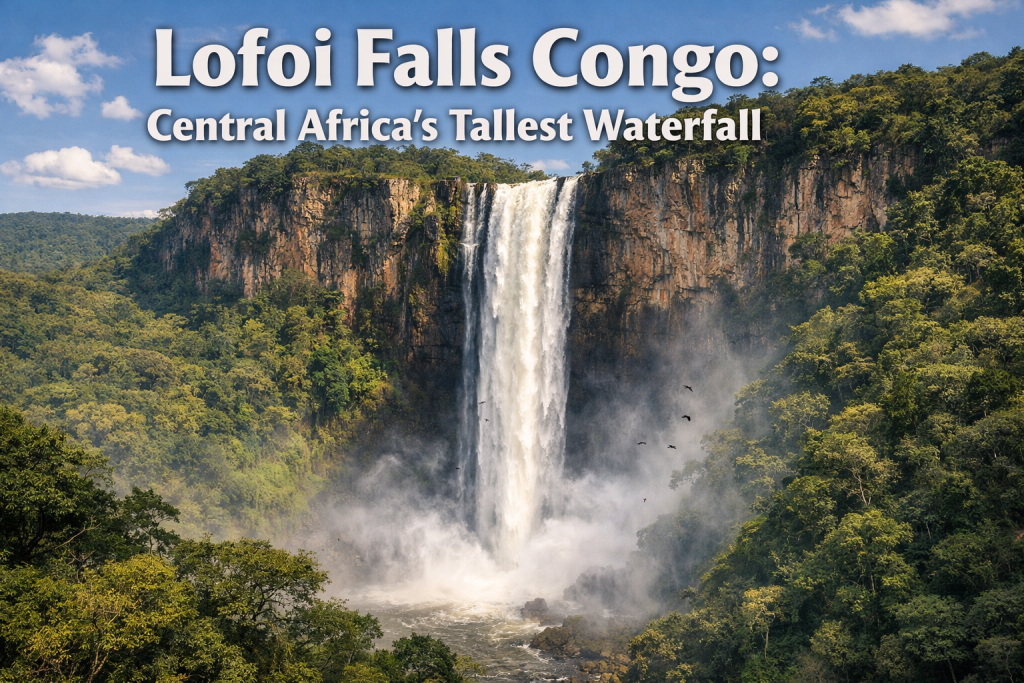
Lofoi Falls Congo drops 340 meters in a single uninterrupted plunge within Kundelungu National Park in Haut-Katanga Province, southeastern Democratic Republic of Congo, making it the tallest waterfall in Central Africa and one of the highest on the continent. The Lofoi River descends from the Kundelungu Plateau as a thin ribbon during dry months and transforms into a wide curtain during the rainy season. Visitors reach the falls after a 300-kilometer 4×4 drive from Lubumbashi followed by savanna hiking, with access managed by the Congolese Institute for the Conservation of Nature and African Parks under a co-management agreement signed in recent years.
Lofoi Falls reaches 340 meters in height, located in Kundelungu National Park, Haut-Katanga Province, DRC.
Access requires a 300+ kilometer 4×4 journey from Lubumbashi plus hiking through miombo woodland terrain.
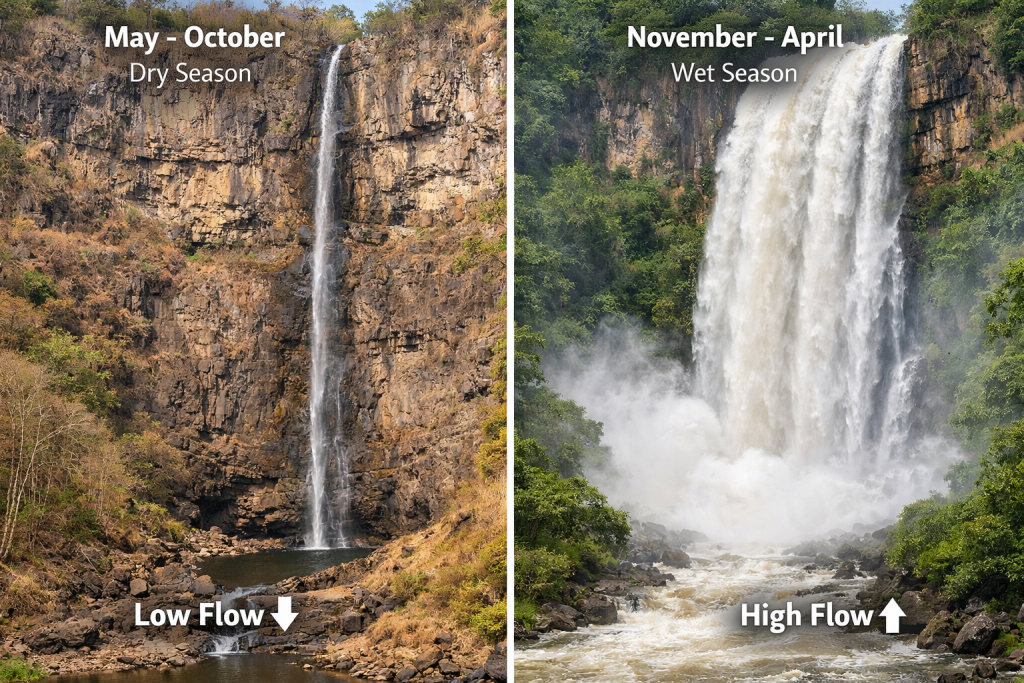
The rainy season (November to April) produces the most water volume, while the dry season (May to October) shows the falls as a thinner cascade.
Park entry fees apply, and visitors should arrange trips through licensed operators familiar with remote DRC travel logistics.
The surrounding 8,165 km² park protects miombo woodlands and endemic species under ICCN and African Parks co-management.
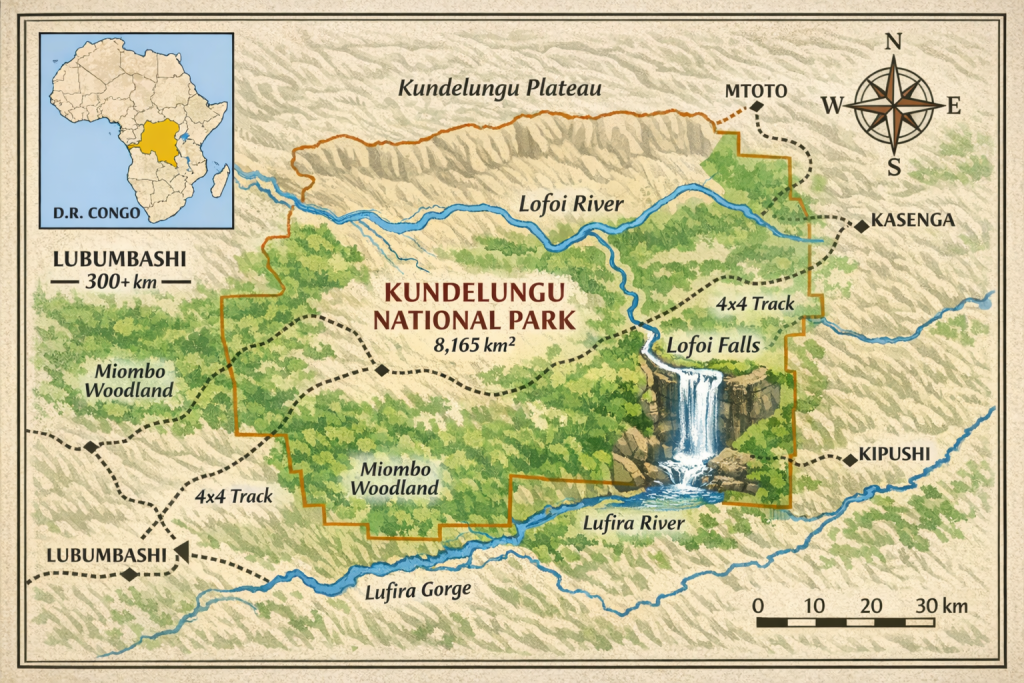
Lofoi Falls Congo is a 340-meter single-drop waterfall in Kundelungu National Park, accessible via long-distance 4×4 travel from Lubumbashi and on-foot approaches through savanna terrain. The falls operate year-round with seasonal flow variations, requiring park entry permits and experienced local guides for safe access.
Lofoi Falls Congo Location and Access in Kundelungu National Park
Lofoi Falls sits within Kundelungu National Park in Haut-Katanga Province, southeastern Democratic Republic of Congo. The park covers 8,165 square kilometers of miombo woodland and plateau terrain. The falls are located where the Lofoi River drops off the edge of the Kundelungu Plateau.
Visitors travel more than 300 kilometers from Lubumbashi, the nearest major city, using 4×4 vehicles capable of handling rough roads and savanna tracks. The journey typically requires a full day of driving before reaching the access point for the falls. Road conditions vary by season, with the rainy period creating muddy and sometimes impassable sections.
After reaching the trailhead, visitors hike through miombo woodland and grassland to reach the falls viewpoint. The walking distance and duration depend on the specific access route chosen by guides. Terrain includes uneven ground, rocky sections, and vegetation that can be dense in places.
No public transport operates to Kundelungu National Park. Visitors must arrange private vehicle hire or book through tour operators who provide 4×4 transport, drivers, and guides as part of package itineraries. Congo Local Guides and other specialized operators arrange multi-day expeditions to the falls for travelers willing to accept remote travel conditions.
Lofoi Falls Congo Height and Physical Characteristics
Lofoi Falls drops 340 meters in a single continuous plunge, ranking it among Africa’s tallest waterfalls and the highest in Central Africa. The water descends vertically down a sheer rock face before hitting a pool at the base. Mist rises from the impact zone, creating spray that can be visible from a distance during high-flow periods.
The Lofoi River originates on the Kundelungu Plateau and flows over the escarpment edge to create the falls. During the dry season from May to October, the river narrows to a thin ribbon of water that appears delicate against the cliff face. Flow volume decreases significantly in these months, sometimes reducing to a fraction of the wet season width.
From November to April, the rainy season swells the river and transforms the falls into a broader curtain of water. The increased volume produces louder sound, heavier mist, and a more powerful visual presence. The pool at the base expands during this period, and spray can reach considerable distances from the falls.
Swallows nest in the cliff face and can be observed darting in and out of the spray zone throughout the year. The rock face shows vertical striations and occasional vegetation clinging to crevices. The surrounding cliffs create an amphitheater effect that amplifies the sound of falling water.
Kundelungu National Park Management and Conservation Status
Kundelungu National Park operates under a co-management agreement between the Congolese Institute for the Conservation of Nature (ICCN) and African Parks, formalized in recent years to restore ecosystems and improve visitor infrastructure. African Parks brings technical expertise, funding, and operational support to the partnership, while ICCN retains governmental authority and regulatory oversight.
The park protects miombo woodland ecosystems and serves as a critical watershed for the Lufira River basin. The area contains high levels of endemic plant and animal species, representing a blend of montane and Katanga regional biodiversity. Conservation priorities include habitat restoration, anti-poaching measures, and community development programs that provide alternatives to resource extraction.
Park management focuses on rebuilding wildlife populations that declined during periods of limited protection. African Parks has committed to long-term investment in ranger training, patrol infrastructure, and ecological monitoring. The partnership aims to balance conservation objectives with sustainable tourism development that benefits local communities.
Visitors contribute to conservation funding through park entry fees, though specific amounts are not publicly listed in current sources. All fees collected support park operations, ranger salaries, and community programs. The remote location and limited visitor numbers mean tourism currently plays a minor role in overall park funding compared to donor support and conservation grants.
Best Time to Visit Lofoi Falls Congo
The rainy season from November to April produces the highest water volume at Lofoi Falls, creating the most visually powerful display. The river swells during these months, and the falls transform into a wide curtain of water with heavy mist and loud sound. Photographers seeking dramatic water flow should plan visits during this period.
The dry season from May to October shows the falls as a thinner cascade, with reduced flow revealing more of the underlying rock face. The water appears as a ribbon rather than a curtain, and mist production decreases. Visibility of the cliff face and surrounding geology improves during these months.
Road access becomes more challenging during the rainy season, with mud and flooding potentially blocking routes or requiring longer detours. Dry season travel offers more reliable road conditions and easier 4×4 navigation, though the falls themselves carry less water. Visitors must balance the trade-off between waterfall volume and access difficulty when choosing travel dates.
Temperatures in the region remain relatively stable year-round due to elevation on the Kundelungu Plateau. Daytime temperatures typically range from warm to hot, with cooler conditions at night. Rainfall concentrates in the wet season months, with dry season days offering more consistent sunshine and lower humidity.
Lofoi Falls Congo Tours and Guided Visits
Visitors cannot independently access Lofoi Falls without local guides and proper park permissions. Tour operators specializing in remote DRC travel arrange multi-day expeditions that include 4×4 transport, camping equipment, food, guides, and park entry coordination. Congo Local Guides markets expeditions to Lofoi as adventure travel for experienced travelers comfortable with basic conditions.
Typical itineraries span three to five days, accounting for the long drive from Lubumbashi, time at the falls, and return travel. Operators provide 4×4 vehicles suitable for rough terrain, along with drivers experienced in navigating unmarked savanna tracks. Camping gear and food supplies are included, as no lodges or restaurants operate near the falls.
Guides serve multiple roles including navigation, translation with local communities, wildlife awareness, and safety management. They coordinate with park rangers for entry permissions and current access conditions. Visitors should confirm that operators hold proper licensing and insurance before booking.
Group sizes typically range from two to eight people, depending on vehicle capacity and operator policies. Private departures can be arranged for solo travelers or couples willing to cover the full vehicle cost. Shared departures reduce per-person costs but require flexibility on dates.
What to Expect at Lofoi Falls Congo
The falls viewpoint requires hiking from the vehicle drop-off point through miombo woodland and grassland. Walking duration varies but typically ranges from 30 minutes to over an hour depending on the specific route and trail conditions. Terrain includes uneven ground, rocks, and potentially muddy sections during or after rain.
The viewpoint offers a frontal perspective of the falls from a distance that allows the full 340-meter drop to be visible. Visitors cannot approach the base of the falls due to terrain and safety constraints. The viewing area consists of natural rock and vegetation without constructed platforms or barriers.
Sound from the falling water varies by season, ranging from a distant roar during low flow to a thundering presence during peak rainy season. Mist reaches the viewpoint during high-flow periods, creating cool spray and potential for wet conditions. Photographers should protect camera equipment from moisture.
Wildlife sightings are possible but not guaranteed during the hike to the falls. Miombo woodland supports various bird species, small mammals, and occasionally larger animals depending on season and time of day. Guides provide information on tracks, calls, and signs of wildlife presence.
No facilities exist at the falls. Visitors must carry all water, food, and supplies needed for the visit. Toilet facilities are not available, requiring bush toilet practices following leave-no-trace principles. Trash must be packed out entirely.
Lofoi Falls Congo Travel Requirements and Logistics
Entry to Kundelungu National Park requires payment of park fees at the entrance gate or through pre-arranged operator bookings. Specific fee amounts are not publicly listed but should be confirmed with tour operators during booking. Fees typically vary based on visitor nationality and duration of stay.
Visitors to the Democratic Republic of Congo need valid passports with at least six months remaining validity. Visa requirements apply to most nationalities and must be obtained before arrival, either through DRC embassies or online e-visa systems where available. Travelers should verify current visa policies well in advance of departure.
Yellow fever vaccination is mandatory for entry to DRC, and visitors must carry proof of vaccination in the form of an international certificate. Malaria prophylaxis is recommended due to the presence of malaria throughout the country. Travelers should consult travel medicine specialists for comprehensive health advice including additional vaccinations and preventive medications.
Travel insurance covering medical evacuation is strongly recommended given the remote location and limited medical facilities in the region. Policies should explicitly cover adventure activities and travel to DRC. Visitors should carry copies of insurance documents and emergency contact numbers.
Cash in US dollars is the most practical currency for park fees and operator payments. ATMs are unreliable outside major cities, and credit cards are not accepted in remote areas. Visitors should bring sufficient cash for the entire trip in small denominations.
Miombo Woodland Ecosystem Around Lofoi Falls Congo
The landscape surrounding Lofoi Falls consists primarily of miombo woodland, a savanna ecosystem dominated by Brachystegia and Julbernardia tree species. This vegetation type covers extensive areas of south-central Africa and supports diverse plant and animal communities adapted to seasonal rainfall patterns.
Kundelungu National Park protects a significant area of miombo woodland along with montane grasslands on the plateau. The park’s location creates habitat for species with restricted ranges, including Katanga endemic plants and animals found nowhere else. Biodiversity levels rank high compared to other protected areas in the region.
The Kundelungu Plateau rises above surrounding lowlands, creating distinct microclimates and vegetation zones. Elevation influences temperature, rainfall patterns, and plant communities. The plateau edge where Lofoi Falls drops marks a transition between higher elevation habitats and lower areas.
The Lufira River basin, which includes the Lofoi River, provides critical watershed functions for the region. Water flowing from the plateau supports downstream ecosystems, agriculture, and human communities. Park protection helps maintain water quality and flow patterns.
Lofoi Falls Congo Cultural and Heritage Significance
Lofoi Falls holds heritage status as a natural landmark of the Haut-Katanga region. Local communities have historical connections to the falls and surrounding landscape, though specific cultural practices and beliefs are not extensively documented in available sources.
Local traditions include beliefs that spirits guard the waters of Lofoi Falls. These spiritual associations reflect broader patterns of sacred natural sites in Central African cultures. Visitors should approach the falls with respect for local cultural values and avoid behaviors that might be considered disrespectful.
The falls serve as a point of regional pride and identity for communities in southeastern DRC. Natural landmarks of this scale carry cultural importance beyond their physical characteristics, representing connections to place, history, and environment.
Tourism development at Lofoi Falls aims to balance visitor access with cultural sensitivity and environmental protection. The partnership between ICCN and African Parks includes community engagement components designed to ensure local voices inform park management decisions.
Photography and Documentation at Lofoi Falls Congo
The 340-meter vertical drop of Lofoi Falls creates photography opportunities for landscape and nature photographers. The full height of the falls requires wide-angle lenses or stepped-back positions to capture in a single frame. Telephoto lenses allow detail shots of water patterns and cliff features.
Light conditions vary throughout the day, with morning and late afternoon providing angled sunlight that can create rainbows in the mist during high-flow periods. Midday light tends to be harsh and creates strong shadows. Overcast conditions during the rainy season produce even lighting suitable for capturing water detail.
Mist from the falls can coat camera equipment during high-flow periods, particularly if wind carries spray toward the viewpoint. Photographers should bring protective covers, lens cloths, and waterproof bags. Moisture can affect electronic equipment if not properly protected.
The hike to the viewpoint requires carrying camera gear over uneven terrain. Photographers should use secure camera bags or harness systems that allow hands-free walking. Tripods are useful for long exposures of the water but add weight and bulk to the hiking load.
Drone photography may be restricted within the national park. Visitors should confirm current regulations with park authorities before bringing drone equipment. Unauthorized drone use in protected areas can result in confiscation and penalties.
Safety Considerations for Lofoi Falls Congo Visits
The remote location of Lofoi Falls means medical facilities are not available within the park or nearby areas. Serious injuries or medical emergencies require evacuation to Lubumbashi, a journey of several hours by 4×4 vehicle. Visitors should carry comprehensive first aid supplies and any personal medications needed.
The hike to the falls viewpoint presents standard wilderness risks including uneven terrain, potential for falls, and exposure to sun and weather. Proper footwear with ankle support and good tread reduces slip and trip hazards. Visitors should carry adequate water to prevent dehydration, particularly during hot weather.
Wildlife in Kundelungu National Park includes species that can pose risks if encountered at close range. Guides provide briefings on appropriate behavior around wildlife and monitor for animal presence during hikes. Visitors should follow guide instructions without deviation.
The 4×4 journey to the park involves long hours on rough roads with limited services. Vehicle breakdowns are possible and may require extended waits for repairs or assistance. Operators should carry spare parts, tools, and communication equipment for emergencies.
Political and security conditions in DRC can change rapidly. Travelers should monitor current advisories from their home country’s foreign affairs department and maintain communication with tour operators about local conditions. Some areas of DRC face active conflict, though Kundelungu National Park has remained stable in recent years.
Accommodation Options for Lofoi Falls Congo Travel
No lodges or hotels operate within Kundelungu National Park. Visitors camp in designated areas using tents and equipment provided by tour operators. Camping sites lack facilities beyond basic cleared ground. Operators provide tents, sleeping mats, and cooking equipment as part of package tours.
Lubumbashi offers the nearest hotel accommodation, located more than 300 kilometers from the falls. Hotels in Lubumbashi range from budget guesthouses to international-standard business hotels. Visitors typically spend at least one night in Lubumbashi before and after the falls expedition.
Camping conditions are basic, with no running water, electricity, or toilet facilities at remote sites. Operators provide portable toilet systems and washing water. Meals are prepared over camp stoves or fires using supplies brought from Lubumbashi.
Sleeping conditions include nighttime temperatures that can drop significantly on the plateau. Visitors should bring or confirm that operators provide adequate sleeping bags rated for cool temperatures. Tents should be weatherproof for potential rain.
Combining Lofoi Falls Congo with Other Kundelungu National Park Activities
Kundelungu National Park contains other natural features beyond Lofoi Falls, though visitor infrastructure remains limited. The park’s 8,165 square kilometers include varied terrain suitable for wildlife viewing, birding, and landscape exploration. Tour operators can arrange extended itineraries that incorporate multiple park locations.
Wildlife viewing opportunities in Kundelungu focus on species adapted to miombo woodland and plateau grassland habitats. The park has historically supported populations of antelope, primates, and other mammals, though wildlife numbers remain lower than peak historical levels due to past poaching pressure. African Parks’ management aims to restore animal populations through protection and habitat management.
Birding in miombo woodland attracts specialists interested in species associated with this ecosystem type. The park’s location supports both widespread African birds and range-restricted species. Visitors with specific birding interests should discuss target species with operators when planning trips.
Hiking routes beyond the Lofoi Falls trail exist but require guides and proper planning. The plateau terrain offers opportunities for multi-day walking safaris for visitors with appropriate fitness levels and wilderness experience. Routes must be coordinated with park management.
Practical Packing List for Lofoi Falls Congo Visits
Visitors should pack clothing suitable for warm days and cool nights, including long pants and long-sleeved shirts for sun protection and insect prevention. Lightweight, quick-drying fabrics work best for active outdoor conditions. A warm layer such as a fleece or light jacket is needed for evenings and early mornings.
Footwear must include sturdy hiking boots with good ankle support and tread for uneven terrain. Boots should be broken in before the trip to prevent blisters. Sandals or camp shoes provide relief during rest periods but are not suitable for hiking.
Sun protection items include high-SPF sunscreen, a wide-brimmed hat, and sunglasses. The plateau elevation increases UV exposure. Insect repellent containing DEET or other effective compounds helps prevent mosquito and other insect bites.
A headlamp or flashlight with spare batteries is needed for camp activities after dark. Camping sites have no artificial lighting. A backup light source provides redundancy if the primary fails.
Personal first aid supplies should include blister treatment, pain relievers, antihistamines, and any prescription medications in quantities sufficient for the trip duration plus extra days. Water purification tablets or a filter system provide backup if operator-supplied water runs short.
A reusable water bottle with at least one-liter capacity allows adequate hydration during hikes. Multiple bottles or a hydration bladder system ensures sufficient water carrying capacity for longer walks.
Camera equipment, spare batteries, and memory cards should be packed in protective cases. Lens cleaning supplies help manage dust and moisture. A waterproof bag or cover protects gear from rain and mist.
Responsible Travel and Conservation Support at Lofoi Falls Congo
Visitors contribute to Kundelungu National Park conservation through park entry fees that fund ranger operations, infrastructure, and community programs. Choosing licensed operators who pay proper fees ensures money reaches park management rather than being diverted.
Leave-no-trace principles apply to all park visits. Visitors must pack out all trash, avoid disturbing wildlife, stay on designated trails, and minimize campfire impacts. Human waste should be buried or managed according to guide instructions.
Respecting local communities includes seeking permission before photographing people, purchasing crafts at fair prices, and following cultural norms regarding behavior and dress. Tour operators should facilitate appropriate community interactions that benefit local residents.
The partnership between ICCN and African Parks includes community development components designed to create local economic benefits from conservation[3][8]. Supporting this model through responsible tourism helps demonstrate that protected areas can provide sustainable livelihoods.
Water resources should be used sparingly, and soaps or detergents should not contaminate natural water sources. Biodegradable products are preferable but still require proper disposal away from streams and rivers.
Frequently Asked Questions About Lofoi Falls Congo
How tall is Lofoi Falls? Lofoi Falls drops 340 meters in a single continuous plunge, making it the tallest waterfall in Central Africa.
Where is Lofoi Falls located? The falls are in Kundelungu National Park, Haut-Katanga Province, southeastern Democratic Republic of Congo.
How do visitors reach Lofoi Falls? Access requires a 300+ kilometer 4×4 drive from Lubumbashi followed by hiking through miombo woodland to the viewpoint. Independent access is not possible without guides and proper park permissions.
What is the best time to visit Lofoi Falls? The rainy season from November to April produces maximum water flow, while the dry season from May to October offers better road conditions but reduced waterfall volume.
Are there lodges near Lofoi Falls? No accommodation exists within the park. Visitors camp using equipment provided by tour operators. The nearest hotels are in Lubumbashi, over 300 kilometers away.
What wildlife can be seen at Lofoi Falls? Miombo woodland around the falls supports birds, small mammals, and occasionally larger animals. Wildlife sightings are possible but not guaranteed. The park protects endemic species specific to the Katanga region.
Do visitors need permits for Lofoi Falls? Park entry fees are required and typically arranged by tour operators as part of package bookings. Specific amounts are not publicly listed.
Is Lofoi Falls safe to visit? The falls are located in a remote area with limited medical facilities and long evacuation times. Visitors should have comprehensive travel insurance, follow guide instructions, and be prepared for wilderness conditions. Political stability in the region should be monitored through current travel advisories.
Can visitors swim at Lofoi Falls? The base of the falls is not accessible to visitors due to terrain and safety constraints. Viewing occurs from a distant vantage point that shows the full drop.
How long does a Lofoi Falls trip take? Typical itineraries span three to five days including travel time from Lubumbashi, time at the falls, and return. The drive each way requires a full day.
What should visitors pack for Lofoi Falls? Essential items include sturdy hiking boots, sun protection, insect repellent, warm layers for cool nights, headlamp, personal medications, water bottles, and camera equipment with protective covers.
Who manages Kundelungu National Park? The park operates under co-management between the Congolese Institute for the Conservation of Nature (ICCN) and African Parks, formalized through a long-term partnership agreement.
Key Takeaways
Lofoi Falls drops 340 meters in a single plunge within Kundelungu National Park, ranking as Central Africa’s tallest waterfall.
Access requires multi-day expeditions from Lubumbashi involving 300+ kilometer 4×4 drives and hiking through miombo woodland terrain.
The rainy season (November to April) produces maximum waterfall flow, while the dry season (May to October) offers better road conditions with reduced water volume.
Kundelungu National Park covers 8,165 square kilometers under ICCN and African Parks co-management focused on ecosystem restoration and community development[.
Visitors must arrange trips through licensed operators who provide 4×4 transport, guides, camping equipment, and park entry coordination.
No lodges or facilities exist at the falls. Camping with basic conditions is the only accommodation option within the park.
The surrounding miombo woodland ecosystem supports endemic species and serves as a critical watershed for the Lufira River basin.
Travel to Lofoi Falls requires valid passports, DRC visas, yellow fever vaccination, malaria prophylaxis, and comprehensive travel insurance covering medical evacuation.
Photography opportunities include the full 340-meter drop, seasonal flow variations, and surrounding plateau landscapes, with mist management needed during high-flow periods.
Responsible travel practices support conservation through park fees, leave-no-trace principles, and choosing operators who contribute to local community benefits.
Conclusion
Lofoi Falls Congo stands as Central Africa’s tallest single-drop waterfall at 340 meters, located within the 8,165-square-kilometer Kundelungu National Park in Haut-Katanga Province. The falls require committed travel planning, including multi-day expeditions from Lubumbashi with experienced guides and 4×4 vehicles capable of handling remote terrain. Seasonal timing determines the trade-off between maximum waterfall flow during the rainy months and more reliable access conditions during the dry season.
The partnership between ICCN and African Parks brings professional management to Kundelungu National Park, focusing on ecosystem restoration, wildlife protection, and sustainable community development. Visitors who make the journey to Lofoi Falls contribute to conservation funding while experiencing one of Central Africa’s most significant natural landmarks in a setting that remains largely untouched by mass tourism.
Travelers planning visits to Lofoi Falls should work with licensed operators familiar with DRC logistics, carry comprehensive insurance, and prepare for wilderness camping conditions. The remote location and basic infrastructure mean this destination suits experienced travelers comfortable with adventure travel realities rather than those seeking conventional safari experiences.