Congo River Travel Guide for Safaris and Tours
The Congo River is the second longest river in Africa at 4,700 kilometers, flowing through the Democratic Republic of Congo and Republic of Congo, serving as a major waterway for river safaris, boat tours, and access to Congo Basin rainforest wildlife areas. The river supports travel between remote national parks, fishing villages, and conservation areas across central Africa, with boat transport operating year-round despite seasonal water level changes.
- Congo River stretches 4,700 kilometers from Lualaba headwaters to Atlantic Ocean through two countries
- River safaris and boat tours provide access to Congo Basin rainforest parks and wildlife areas
- Navigation conditions vary by season with high water May to November, low water December to April
- Security restrictions limit tourist access in eastern DRC territories due to ongoing armed group activity
- Boat travel requires advance planning for permits, guides, fuel arrangements, and accommodation logistics
- Western sections near Brazzaville and Kinshasa offer more accessible river tour options for visitors
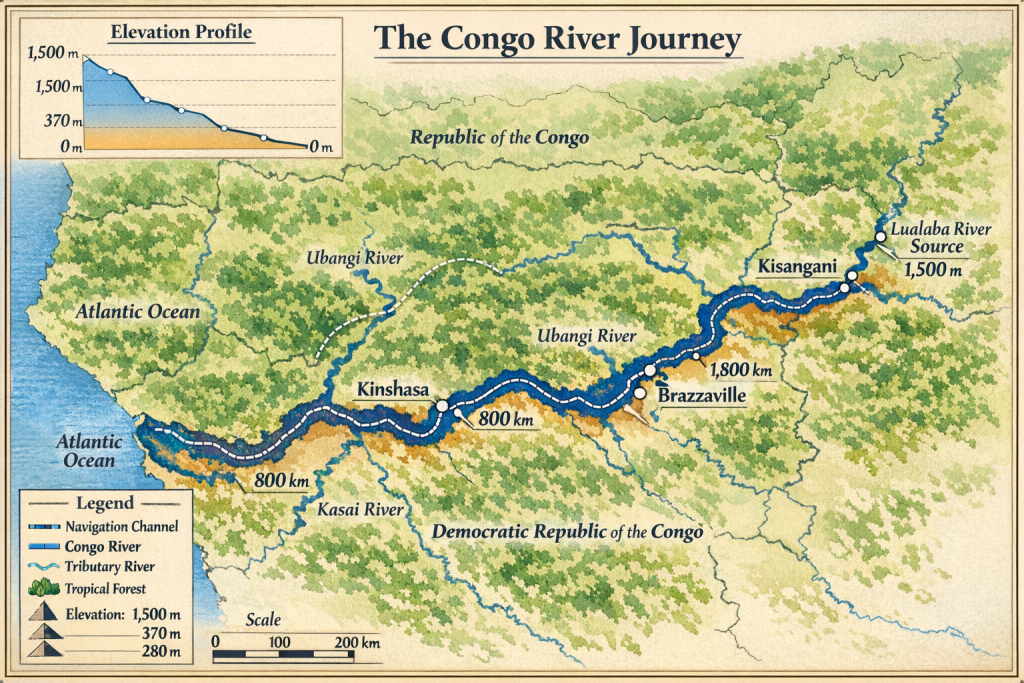
Congo River travel in 2026 involves navigating a complex waterway system that connects remote rainforest areas, national parks, and local communities across central Africa. Visitors planning river safaris face practical considerations including seasonal water levels affecting boat access, security conditions varying by region, permit requirements for protected areas, and limited tourism infrastructure outside major cities. The river serves as both a transportation corridor and wildlife viewing platform, with boat tours ranging from day trips near urban centers to multi-day expeditions into forest zones.
Congo River Location and Geography
The Congo River forms the primary drainage system for the Congo Basin, flowing 4,700 kilometers from headwaters in the East African Rift to the Atlantic Ocean. The river begins as the Lualaba River in southeastern Democratic Republic of Congo, becomes the Congo River at Boyoma Falls near Kisangani, and empties into the Atlantic between Muanda (DRC) and Pointe-Noire (Republic of Congo).
Major tributaries include the Kasai River (2,153 kilometers), Ubangi River (2,270 kilometers), and Sangha River (790 kilometers). These tributaries create a network of navigable waterways totaling more than 14,000 kilometers during high water periods.
The river drops 270 meters in elevation through a series of rapids and falls between Kinshasa and Matadi, creating a non-navigable section known as the Livingstone Falls. This 350-kilometer stretch divides the river into distinct navigation zones requiring different boat types and travel planning.
Water depth varies from 3 meters in shallow sections during low water to more than 220 meters in the Malebo Pool near Kinshasa and Brazzaville. Channel depth affects boat access to tributaries, fishing villages, and park entry points throughout the year.
Congo River Boat Safaris and Tours

River safaris on the Congo River operate primarily as transportation combined with wildlife viewing opportunities rather than dedicated game viewing activities. Boat tours range from half-day excursions near cities to week-long journeys between remote settlements and protected areas.
Day tours from Brazzaville and Kinshasa cover sections of the Malebo Pool, visiting river islands, fishing communities, and bird viewing areas. These trips typically last 4 to 6 hours and use motorized boats with capacity for 6 to 12 passengers.
Multi-day river journeys connect Kisangani to Kinshasa, covering approximately 1,700 kilometers over 7 to 14 days depending on boat type and stops. Barges carrying passengers and cargo make this route regularly, stopping at riverside settlements for loading and unloading.
Private boat charters provide access to specific national parks and conservation areas along tributaries. Salonga National Park, Virunga National Park (via Lake Edward connections), and Odzala-Kokoua National Park require boat transport for certain entry points and internal navigation.
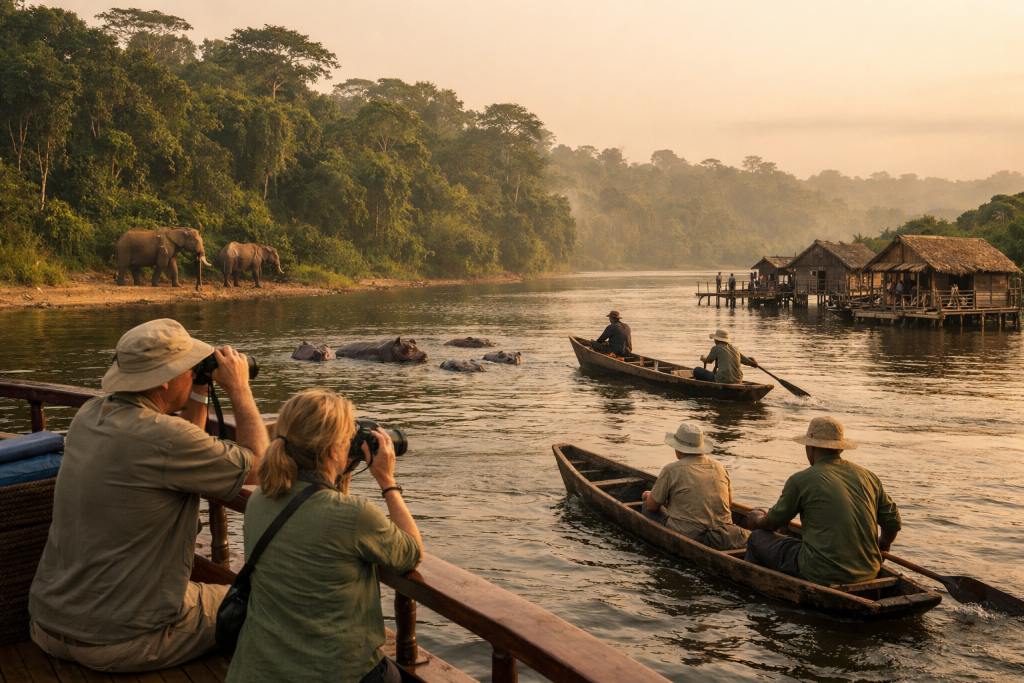
Wildlife viewing from boats includes hippos, crocodiles, forest elephants at riverbanks, water birds, and primates in riverside forest. Sightings depend on location, time of day, and seasonal animal movements, with no guarantees of specific species encounters.
Best Time for Congo River Travel
Water levels follow two main seasons that affect navigation, boat access, and travel planning. High water occurs from May through November when rainfall increases river depth and opens smaller channels and tributaries for boat passage.
Low water from December through April reduces depth in many sections, limiting access to tributaries and requiring smaller boats or alternative routes. Some fishing villages and park entry points become unreachable by larger vessels during this period.
Temperature remains relatively constant year-round, ranging from 24°C to 30°C in most river sections. Humidity stays high at 80% to 90%, with afternoon rain showers common during wet months.
Bird viewing improves during dry months when water birds concentrate at remaining pools and sandbars. Migratory species from Europe and northern Africa arrive between November and March, increasing diversity for birding tours.
Fishing communities operate year-round but catch rates and species availability change with water levels. Commercial fishing intensifies during low water when fish concentrate in main channels and remaining pools.
Congo River Access and Transportation
International visitors typically reach the Congo River through Kinshasa (N’Djili Airport) in DRC or Brazzaville (Maya-Maya Airport) in Republic of Congo. Both cities sit on opposite banks of the river connected by ferry services and boat transfers.
Road access to river ports varies significantly by location and season. Paved roads serve Kinshasa, Brazzaville, and Pointe-Noire, while routes to Kisangani, Mbandaka, and smaller settlements remain unpaved and condition-dependent.
Boat types operating on the river include motorized pirogues (traditional canoes with outboard motors), passenger barges, cargo vessels, private speedboats, and chartered tour boats. Pirogue capacity ranges from 2 to 20 passengers, while barges can carry several hundred people plus cargo.
Fuel availability limits travel planning in remote sections. Visitors must arrange fuel supplies in advance for trips beyond major settlements, as diesel and petrol stations exist only in larger towns.
River navigation requires experienced local guides familiar with channels, sandbanks, rapids, and seasonal hazards. Independent boat travel without local knowledge creates safety risks from hidden obstacles and changing water conditions.
Congo River National Parks and Wildlife Areas

Several protected areas along the Congo River and tributaries offer wildlife viewing, forest walks, and conservation tourism activities. Access requires boat transport for most locations.
Salonga National Park in central DRC covers 33,350 square kilometers of rainforest accessible only by river. The park protects bonobos, forest elephants, Congo peacocks, and endemic fish species. Visitor access requires permits from ICCN (Institut Congolais pour la Conservation de la Nature) and arrangements through registered operators.
Odzala-Kokoua National Park in Republic of Congo sits along tributaries of the Sangha River system. The park offers gorilla tracking, forest elephant viewing, and birdwatching, with boat access to certain zones and lodges. Permits cost approximately $100 per person per day for non-residents.
Virunga National Park in eastern DRC includes sections along Lake Edward and connecting waterways to the Congo River system. Security conditions in this region remain unstable, with armed group activity continuing in Beni, Lubero, and surrounding territories as of February 2026.
Tumba-Ngiri-Maindombe wetlands form a Ramsar site covering 65,696 square kilometers of flooded forest and lakes connected to the Congo River. The area supports fishing communities, waterbirds, and seasonal fish migrations but has limited tourism infrastructure.
Congo River Security and Travel Restrictions
Security conditions vary significantly across different sections of the Congo River basin. Eastern DRC territories including Beni, Lubero, Irumu, and Mambasa continue to experience armed group activity more than four years after joint military operations began in November 2021.
The M23 rebel group seized Goma in January 2025 and Bukavu in February 2025, affecting travel in North Kivu and South Kivu provinces. Angola proposed a ceasefire between DRC government and M23 to take effect February 18, 2026, though implementation remained unconfirmed at time of reporting.
Western sections of the river near Brazzaville, Kinshasa, and downstream to the Atlantic maintain more stable conditions for tourism. Most international tour operators focus activities in these areas and Republic of Congo territories.
Travel advisories from foreign governments recommend avoiding eastern DRC entirely and exercising caution in other regions. Visitors should verify current security conditions with embassies and registered tour operators before planning river trips.
Insurance coverage for river travel in DRC and Republic of Congo requires specific policies covering evacuation, medical emergencies, and trip cancellation related to security incidents. Standard travel insurance often excludes coverage in conflict-affected areas.
Congo River Permits and Regulations
Entry to DRC requires a visa obtained in advance from DRC embassies or through approved visa services. Tourist visas typically allow 30-day stays and cost approximately $200 to $300 depending on nationality and processing location.
Republic of Congo visas also require advance application, with tourist visas valid for 30 to 90 days. Processing takes 5 to 10 business days through embassies.
National park permits must be arranged separately from entry visas. Each protected area has specific permit costs, application procedures, and advance booking requirements ranging from 48 hours to several weeks.
Boat operators require registration and licensing from maritime authorities. Visitors should verify operator credentials and insurance coverage before booking river transport.
Photography permits apply in some protected areas and military zones. Filming equipment may require additional permits and fees, particularly for commercial or documentary purposes.
Yellow fever vaccination certificates are mandatory for entry to both DRC and Republic of Congo. Malaria prophylaxis is recommended for all river travel areas, as the entire Congo Basin falls within high transmission zones.
Congo River Accommodation and Logistics
Accommodation options along the river range from international-standard hotels in Kinshasa and Brazzaville to basic guesthouses in provincial towns and camping in remote areas. Advance booking is required for lodges near national parks.
River barges offer passenger cabins for multi-day journeys, with conditions varying from basic bunks to slightly better private rooms. Passengers typically bring their own food, bedding, and drinking water for these trips.
Camping equipment must be carried for expeditions into roadless areas. Tents, mosquito nets, water purification systems, and cooking gear are required, as supplies cannot be purchased in remote settlements.
Food availability in riverside villages consists mainly of fish, cassava, plantains, and rice. Visitors with dietary restrictions should carry supplementary food supplies from major cities.
Drinking water requires treatment throughout the river system. Bottled water is available in cities but not in remote areas, making water purification tablets or filters necessary equipment.
Communication infrastructure is limited outside urban centers. Satellite phones provide the only reliable communication in many river sections, as mobile phone coverage ends beyond provincial capitals.
Congo River Conservation and Community Tourism
The Congo Basin rainforest faces pressure from deforestation, with a $2.5 billion pledge announced in November 2025 at COP30 to support conservation efforts. Implementation discussions in January 2026 identified needs for clear financing channels, institutional coordination, legal frameworks, and community engagement.
Community-based tourism initiatives operate in some areas, providing income to fishing villages and forest communities through guided tours, craft sales, and cultural demonstrations. These programs require advance arrangements through conservation organizations or registered tour operators.
Fishing regulations apply to commercial and subsistence fishing throughout the river system. Sport fishing by tourists requires permits in most areas and follows catch limits for protected species.
Forest elephant populations use the river as a corridor between protected areas. Viewing opportunities occur at riverbanks during early morning and late afternoon, particularly in areas with mineral-rich soil deposits that attract elephants.
Bonobo conservation programs in central DRC include research stations accessible by river. Visits require advance permission from research organizations and contribute to conservation funding.
Congo River Boat Safari Costs and Booking
Day boat tours from Brazzaville or Kinshasa cost approximately $80 to $150 per person for group tours of 6 to 12 people. Private charters range from $300 to $600 per day depending on boat size and fuel requirements.
Multi-day barge journeys between Kisangani and Kinshasa cost $50 to $100 per person for basic passage, with additional charges for cabin upgrades, meals, and cargo transport. Total journey costs including food and supplies typically reach $200 to $400 per person.
National park-focused river safaris arranged through international operators cost $2,000 to $5,000 per person for 7 to 10-day itineraries including permits, guides, accommodation, and internal transport. These packages typically focus on Republic of Congo parks due to security conditions in DRC.
Independent travel costs vary based on negotiated rates for boat charters, guide fees, and accommodation. Budget-conscious travelers can reduce costs by using public river transport and basic guesthouses, but this requires flexibility and tolerance for basic conditions.
Booking lead times range from 2 weeks for simple day tours to 3 to 6 months for national park safaris requiring permits and lodge reservations. Peak season bookings (June through September) fill earliest.
Congo River Photography and Wildlife Viewing
Wildlife photography from boats requires telephoto lenses in the 200mm to 400mm range for adequate reach to riverbanks and forest edges. Image stabilization helps compensate for boat movement.
Light conditions in the Congo Basin favor early morning and late afternoon shooting, with harsh midday sun creating contrast challenges. Overcast conditions common during rainy season provide even lighting for forest and river scenes.
Waterproof protection for camera equipment is necessary due to rain, river spray, and high humidity. Dry bags, rain covers, and silica gel packets help protect gear during boat travel.
Bird photography opportunities include African fish eagles, pied kingfishers, African skimmers, herons, and numerous forest species along riverbanks. Patience and quiet approach improve success rates.
Hippo and crocodile sightings occur regularly in certain river sections, but safe viewing distances of 20 to 30 meters must be maintained. Boat operators familiar with animal behavior position vessels appropriately.
Frequently Asked Questions
How long is the Congo River? The Congo River measures 4,700 kilometers from source to Atlantic Ocean, making it the second longest river in Africa after the Nile. The main navigable section from Kisangani to Kinshasa covers approximately 1,700 kilometers.
Is the Congo River safe for tourists in 2026? Safety varies by location, with western sections near Brazzaville and Kinshasa considered relatively stable for tourism. Eastern DRC territories continue to experience armed group activity and are not recommended for tourist travel. Visitors should verify current conditions with embassies before planning trips.
What wildlife can be seen on Congo River boat tours? Common sightings include hippos, crocodiles, water birds, forest elephants at riverbanks, and various primate species in riverside forest. Fish species, monitor lizards, and butterflies are also regularly observed. Specific wildlife encounters depend on location, season, and timing.
When is the best time to visit the Congo River? High water season from May through November offers better access to tributaries and remote areas. Dry season from December through April concentrates wildlife at riverbanks and provides better conditions for photography. Choice depends on specific travel goals and destinations.
Do I need special permits for Congo River travel? Entry visas are required for both DRC and Republic of Congo. National park permits must be obtained separately for protected areas. Boat operators should have proper licensing. Yellow fever vaccination certificates are mandatory for entry to both countries.
How much does a Congo River safari cost? Day tours from major cities cost $80 to $150 per person. Multi-day barge journeys run $200 to $400 total per person. National park-focused safaris through international operators cost $2,000 to $5,000 per person for 7 to 10-day trips including all arrangements.
What is the water temperature in the Congo River? Water temperature remains relatively constant at 25°C to 28°C year-round due to equatorial location. Air temperature ranges from 24°C to 30°C with high humidity of 80% to 90% throughout the year.
Can tourists swim in the Congo River? Swimming is not recommended due to strong currents, hippos, crocodiles, and waterborne diseases including schistosomiasis. Most tour operators prohibit swimming for safety reasons.
What languages are spoken along the Congo River? French serves as the official language in both DRC and Republic of Congo. Lingala is widely spoken along the river as a trade language. Kikongo, Swahili, and numerous local languages are used in different regions.
How do I book a Congo River tour? International tour operators specializing in central Africa safaris arrange complete packages including permits, guides, and logistics. Local operators in Kinshasa and Brazzaville offer day tours and boat charters. Booking lead times of 2 weeks to 6 months apply depending on trip complexity.
Key Takeaways
The Congo River provides access to central Africa’s rainforest ecosystems, national parks, and wildlife areas through boat-based travel and river safaris. Visitors planning trips in 2026 face practical considerations including seasonal water level changes affecting navigation, regional security conditions limiting access to eastern territories, and infrastructure limitations requiring careful advance planning.
Western sections of the river near Brazzaville and Kinshasa offer the most accessible options for tourists, with established day tour operations and connections to Republic of Congo national parks. Eastern DRC territories remain affected by armed group activity and are not recommended for tourist travel based on current security conditions.
Successful river travel requires advance arrangements for permits, experienced local guides, appropriate boat transport, and realistic expectations about conditions and wildlife viewing opportunities. The river serves primarily as a transportation corridor with wildlife viewing as a secondary benefit rather than a dedicated safari experience.
Conservation efforts including the $2.5 billion Congo Basin pledge announced in 2025 aim to protect the rainforest ecosystem, with implementation requiring coordination between governments, communities, and conservation organizations. Tourism contributes to these efforts when properly managed through registered operators and community-based programs.
Costs for Congo River travel range from budget options using public river transport to premium safari packages through international operators. Planning timelines of several months allow for proper permit acquisition, security verification, and logistical arrangements needed for safe and legal travel in the region.