Salonga National Park Dr Congo Travel Guide
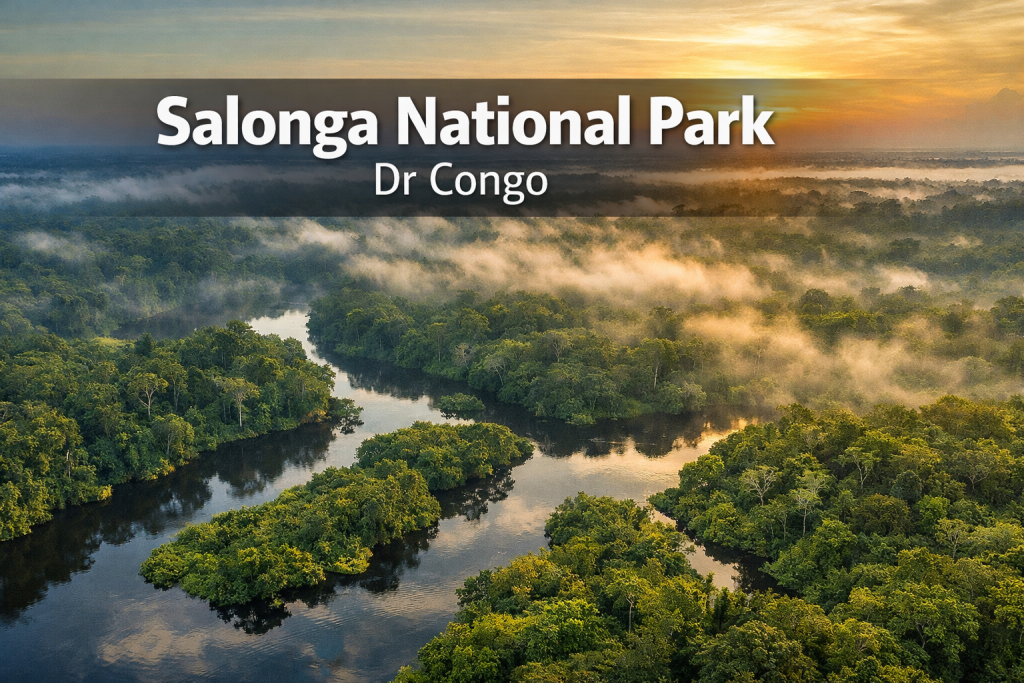
Salonga National Park Dr Congo is Africa’s largest tropical rainforest reserve, covering more than 36,000 square kilometers in the central Congo River basin. The park was established in 1970 and designated a UNESCO World Heritage Site in 1984. Access to Salonga National Park Dr Congo is restricted to water transport only due to its extreme isolation. The reserve protects bonobos, forest elephants, Congo peacocks, and other rainforest species across two separate sectors divided by a 45-kilometer corridor.
Salonga National Park Dr Congo spans 36,000 square kilometers of protected rainforest accessible only by boat or aircraft. The park protects bonobos found nowhere else outside the Democratic Republic of Congo. Visitor access requires coordination with park authorities and specialized operators. Travel to Salonga National Park Dr Congo involves multi-day water transport from regional centers. The park operates under co-management between WWF and the Congolese Institute for Nature Conservation since 2015.
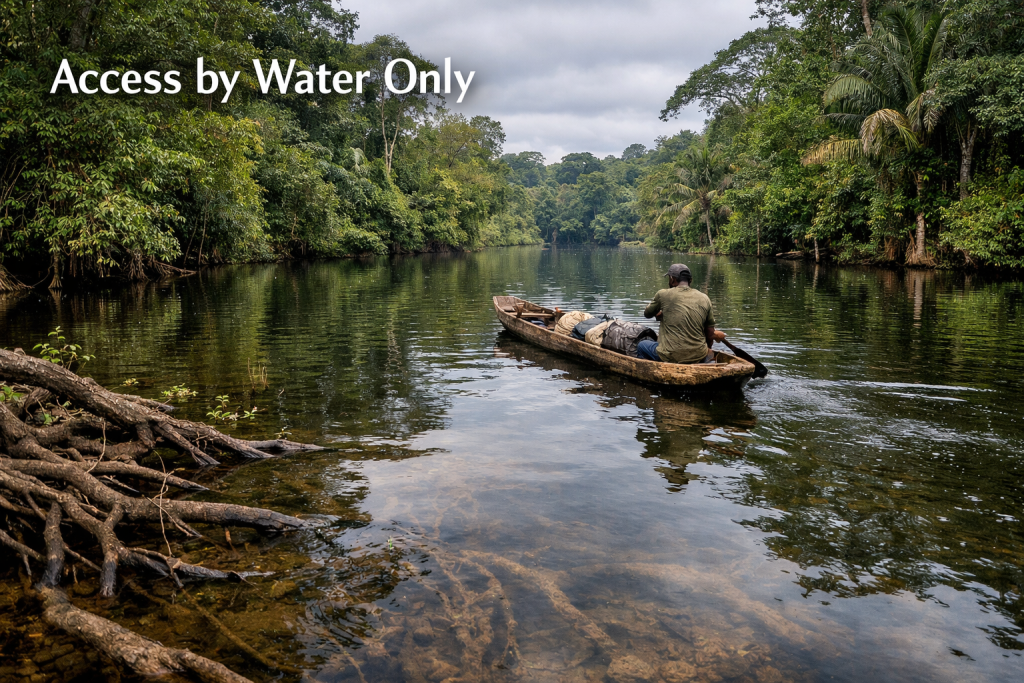
Salonga National Park Dr Congo functions as a managed conservation area in the heart of the Congo basin, protecting critical rainforest habitat and endemic species. The park consists of two separate blocks totaling more than 36,000 square kilometers with no road access. Visitors reach the park exclusively by boat along river systems or by charter aircraft to limited airstrips. Tourism infrastructure remains minimal, with visits organized through specialized conservation-focused operators working directly with park management.
Salonga National Park Location and Geography
Salonga National Park Dr Congo sits at the geographic center of the Congo River basin in the Democratic Republic of Congo. The park occupies lowland rainforest terrain between the Lomela, Luilaka, Salonga, and Yenge rivers. Elevation across the park ranges from 300 to 700 meters above sea level.
The reserve divides into two separate sectors. The northern block covers approximately 10,000 square kilometers. The southern block spans roughly 26,000 square kilometers. A 45-kilometer corridor of unprotected forest separates these two sections.
The park’s terrain consists primarily of flooded forest, swamp forest, and terra firma rainforest. Seasonal flooding affects large portions of the park between October and May. Water levels can rise several meters during peak flood periods, transforming forest floor into navigable waterways.
Wildlife Species in Salonga National Park Dr Congo
Salonga National Park Dr Congo protects the largest population of bonobos remaining in the wild. Bonobos exist only in the Democratic Republic of Congo and nowhere else on Earth. The park’s isolation provides critical habitat for these endangered primates.
Forest elephants inhabit both sectors of the park. These elephants are smaller than savannah elephants and adapted to dense forest conditions. Population estimates remain uncertain due to the park’s size and limited survey capacity.
The Congo peacock, Africa’s only true forest pheasant, occurs throughout Salonga. This species was scientifically described in 1936 and remains difficult to observe. Giant pangolins, bongos, and African slender-snouted crocodiles also inhabit the park.
Bird species documented in Salonga exceed 130 species. The park supports populations of grey parrots, hornbills, and multiple kingfisher species. Aquatic birds concentrate along river channels and flooded forest zones.
Access and Transport to Salonga National Park Dr Congo
No roads reach Salonga National Park Dr Congo. All access occurs via water transport along the Congo River system and its tributaries. Visitors typically depart from Kinshasa, Mbandaka, or Lodja depending on which park sector they plan to visit.
River travel from Mbandaka to the northern sector takes between three and seven days depending on water levels and boat type. Motorized pirogues serve as the primary transport method. These traditional wooden boats range from six to twelve meters in length.
Charter flights to grass airstrips near park boundaries reduce travel time but require advance coordination with park authorities. The Bekongo patrol post maintains a small airstrip suitable for light aircraft. Weather conditions and seasonal flooding affect flight operations.
Visitors must arrange transport through operators registered with park management. Independent travel to Salonga National Park Dr Congo is not permitted without prior authorization from the Congolese Institute for Nature Conservation.
Salonga National Park Visitor Regulations and Permits
Entry to Salonga National Park Dr Congo requires permits issued by the Congolese Institute for Nature Conservation. Applications must be submitted at least 30 days before planned arrival. Permit fees vary based on visit duration and activities.
All visitors must travel with authorized guides provided by park management. Independent exploration is prohibited. Group sizes are limited to eight people per guide for forest activities.
Photography and filming require separate permits. Commercial filming applications undergo additional review and may require months for approval. Drone use is prohibited without specific authorization.
Visitors must follow health protocols including yellow fever vaccination documentation. Malaria prophylaxis is required. Medical evacuation insurance covering the Congo basin region is mandatory for all visitors.
Conservation Management at Salonga National Park Dr Congo
WWF and the Congolese Institute for Nature Conservation have co-managed Salonga National Park Dr Congo since 2015. This partnership focuses on eco-guard training, patrol infrastructure, and community engagement around park boundaries.
More than 100 eco-guards operate across both park sectors. These rangers conduct anti-poaching patrols, wildlife monitoring, and visitor management. The Bekongo patrol post is being developed into a training center for new recruits.
Park management has expanded patrol coverage through procurement of additional motorcycles and boats. Transport limitations previously restricted ranger access to remote park zones. New equipment allows more frequent patrols along river systems and into interior forest areas.
UNESCO removed Salonga from the List of World Heritage in Danger on July 19, 2021. This decision recognized improved security conditions and reduced poaching pressure. The park had been listed as endangered due to civil conflict impacts and illegal hunting.
Climate and Seasonal Conditions at Salonga National Park Dr Congo
Salonga National Park Dr Congo experiences equatorial rainforest climate with high rainfall year-round. Annual precipitation ranges from 1,800 to 2,200 millimeters. No true dry season occurs, but rainfall decreases slightly between June and August.
Temperatures remain stable throughout the year, averaging 24 to 26 degrees Celsius. Humidity stays above 80 percent in all months. Cloud cover is common, with limited direct sunlight reaching the forest floor.
Flooding affects access and movement within the park between October and May. Water levels peak between March and May. River travel becomes easier during flood periods as smaller channels become navigable. Forest walking becomes more difficult as water covers trails and low-lying areas.
The period from June through September offers relatively lower water levels. This season provides better conditions for forest trekking but may restrict access to certain river routes. Wildlife viewing does not vary significantly by season due to year-round forest cover.
Proposed Oshwe Community Forests Corridor
The Oshwe Community Forests initiative aims to create an ecological corridor connecting Salonga National Park Dr Congo with the Oshwe Hunting Reserve and Mangai Hunting Domain. This proposed expansion would add protected habitat between the park’s two sectors.
The corridor project focuses on community-based forest management. Local communities would maintain sustainable use rights while protecting forest connectivity for wildlife movement. Bonobo populations in particular would benefit from linked habitat across the landscape.
Implementation requires coordination between national authorities, local communities, and conservation organizations. Funding for the corridor comes from international conservation partnerships. Timeline for full establishment remains dependent on community agreements and government approvals.
Accommodation and Logistics for Salonga National Park Travel
No permanent tourist lodges or camps operate within Salonga National Park Dr Congo. Visitors stay in basic field camps established by their tour operator. These camps consist of tents with minimal facilities.
Camping equipment must be transported by visitors or their operator. This includes tents, sleeping gear, cooking equipment, and food supplies. Water purification systems are required as no treated water is available.
Field camps typically establish near patrol posts where eco-guards are stationed. The Bekongo post provides the most developed visitor facilities, though these remain basic. Pit latrines and washing areas are available at established posts.
All food and supplies must be brought from outside the park. Resupply during visits is not possible. Trips typically last seven to fourteen days depending on objectives and access routes.
Bonobo Tracking and Wildlife Viewing Activities
Bonobo tracking in Salonga National Park Dr Congo differs significantly from habituated primate tracking in other African parks. Bonobos in Salonga are not habituated to human presence. Sightings require extended forest searches and occur at greater distances than in habituated populations.
Tracking sessions last between four and eight hours. Terrain is difficult, involving movement through dense undergrowth, across streams, and over fallen trees. Physical fitness requirements are high. Age restrictions typically apply, with minimum ages of 15 or 16 years depending on operator policies.
Wildlife viewing focuses on indirect signs and forest ecology rather than guaranteed animal sightings. Guides interpret tracks, feeding sites, nests, and vocalizations. Direct animal observations occur opportunistically and cannot be predicted.
Bird watching opportunities exist along river channels and at forest edges. Early morning boat trips provide the best conditions for observing aquatic and canopy species. Binoculars are required as viewing distances are often significant.
Research and Scientific Activities at Salonga National Park Dr Congo
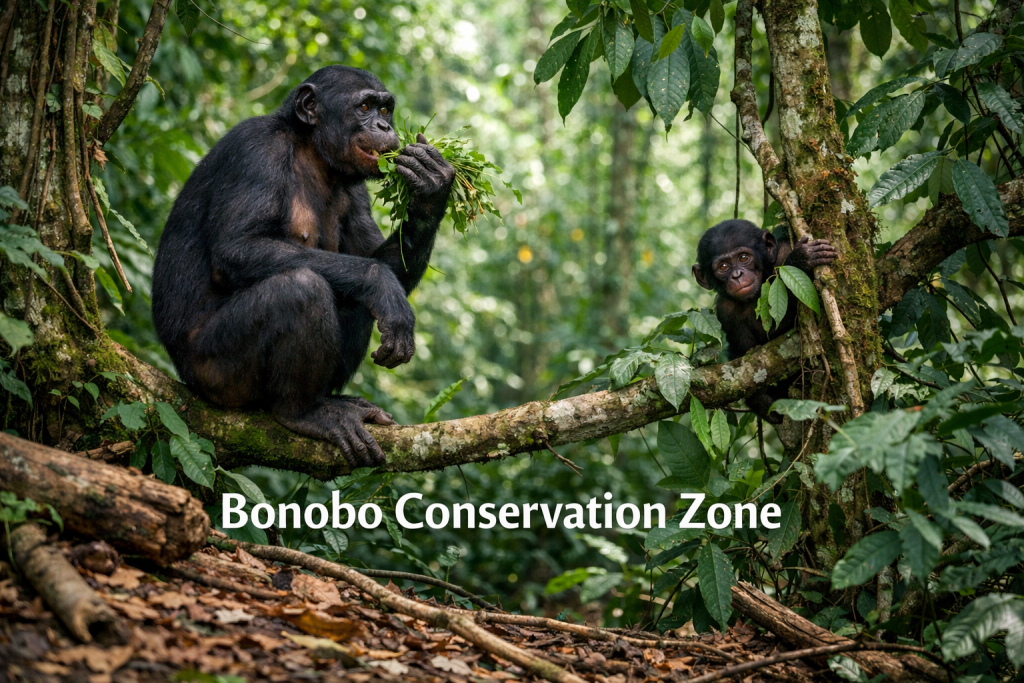
Salonga National Park Dr Congo serves as an active research site for tropical forest ecology and primate behavior studies. Research permits require separate applications to the Congolese Institute for Nature Conservation and relevant academic institutions.
Long-term bonobo research projects operate in both park sectors. These studies focus on population dynamics, ranging behavior, and genetic diversity. Research teams maintain semi-permanent field camps with authorization for extended stays.
Forest elephant monitoring uses camera traps and dung count surveys. These methods provide population estimates without requiring direct animal contact. Data collection occurs year-round with seasonal variations in survey intensity.
Climate research at Salonga focuses on carbon storage in swamp forests and peat deposits. The park plays a significant role in regional climate regulation through carbon sequestration. Scientific teams measure forest biomass and soil carbon content.
Travel Costs and Booking Procedures for Salonga National Park Tours
Salonga National Park Dr Congo trips cost between 8,000 and 15,000 US dollars per person for ten to fourteen day itineraries. Prices reflect transport costs, permit fees, guide salaries, and logistical complexity. Group bookings reduce per-person costs.
Booking lead times of three to six months are standard. Permit processing, transport arrangements, and supply procurement require extended preparation periods. Last-minute bookings are not possible.
Deposits of 30 to 50 percent are required at booking confirmation. Full payment is typically due 60 days before departure. Cancellation policies vary by operator but generally impose significant penalties within 90 days of departure.
Costs include park permits, guide fees, camping equipment, food supplies, and water transport. International flights to Kinshasa, domestic flights within DRC, and personal equipment are excluded. Travel insurance with evacuation coverage adds 300 to 600 US dollars per person.
Health and Safety Considerations for Salonga National Park Visitors
Malaria transmission occurs year-round in Salonga National Park Dr Congo. Prophylaxis medication is required for all visitors. Mosquito nets and repellent are necessary precautions. No medical facilities exist within the park or within several days travel of park boundaries.
Yellow fever vaccination is mandatory for entry to the Democratic Republic of Congo. Documentation must be presented at immigration. Typhoid, hepatitis A, and hepatitis B vaccinations are recommended.
Water-borne diseases including cholera and typhoid present risks. All drinking water must be purified through filtration, chemical treatment, or boiling. River water is not safe for consumption without treatment.
Medical evacuation from Salonga National Park Dr Congo requires charter aircraft and can take 24 to 72 hours to arrange. Evacuation costs range from 15,000 to 40,000 US dollars depending on patient condition and destination. Insurance covering this scenario is mandatory.
Conservation Challenges and Park Protection Efforts
Poaching pressure in Salonga National Park Dr Congo has decreased since 2015 but remains an ongoing concern. Bushmeat hunting targets bonobos, forest elephants, and other large mammals. Increased eco-guard patrols have reduced illegal hunting in core park zones.
Commercial logging does not occur within park boundaries but affects surrounding forests. Logging roads in adjacent areas can facilitate poacher access to park edges. Buffer zone management aims to reduce these impacts.
Climate change affects flood patterns and forest composition in Salonga. Extended flooding periods may alter wildlife distribution and movement patterns. Research programs monitor these changes to inform adaptive management.
Community engagement programs work with villages near park boundaries. These initiatives provide alternative livelihoods and reduce dependence on bushmeat hunting. Success varies by location and requires sustained support.
Comparison with Other Congo Basin National Parks
Salonga National Park Dr Congo differs from Virunga National Park and Kahuzi-Biega National Park in accessibility and infrastructure. Virunga and Kahuzi-Biega offer habituated gorilla tracking with established tourism facilities. Salonga provides no habituated wildlife and minimal infrastructure.
Odzala-Kokoua National Park in Republic of Congo offers more developed rainforest tourism with permanent lodges and habituated western lowland gorillas. Access to Odzala is easier via scheduled flights from Brazzaville. Costs are comparable but Odzala provides more comfort.
Nouabalé-Ndoki National Park, also in Republic of Congo, shares Salonga’s remote character but has better research infrastructure. Nouabalé-Ndoki supports long-term studies with semi-permanent research stations. Tourist visits integrate with research operations.
Salonga remains the least accessible major protected area in the Congo basin. This isolation provides conservation benefits but limits tourism development. Visitors seeking rainforest experience with better logistics should consider alternative parks.
Photography and Documentation at Salonga National Park Dr Congo
Photography in Salonga National Park Dr Congo faces challenges from low light conditions, high humidity, and limited wildlife visibility. Camera equipment must be protected from moisture and rain. Waterproof bags and silica gel packets are necessary.
Wildlife photography requires long lenses of 400mm or greater. Dense vegetation and animal wariness mean close approaches are rare. Most wildlife images are documentary rather than frame-filling portraits.
Video documentation requires stabilization equipment as boat travel and forest walking create constant movement. Gimbal stabilizers or quality in-body stabilization are necessary for usable footage.
Permits for professional photography and filming cost additional fees beyond standard entry permits. Commercial use of images may require separate agreements with park authorities. Processing times for commercial permits extend booking lead times.
Cultural Context and Local Communities Around Salonga National Park
Indigenous communities including Mongo and Batwa peoples live in villages surrounding Salonga National Park Dr Congo. These communities have historical connections to forest resources predating park establishment. Park management works to balance conservation goals with community needs.
Traditional hunting and gathering practices continue in buffer zones outside park boundaries. Some communities maintain customary rights to specific forest areas. Conservation programs aim to support sustainable use rather than complete exclusion.
Community members serve as eco-guards, boat operators, and porters for park operations and visitor activities. These employment opportunities provide income alternatives to resource extraction. Training programs build local capacity for conservation work.
Cultural visits to communities near park access points can be arranged through tour operators. These visits provide context for conservation challenges and community perspectives. Interactions must be arranged respectfully with community consent.
Best Time to Visit Salonga National Park Dr Congo
The period from June through September offers the most practical conditions for visiting Salonga National Park Dr Congo. Water levels drop during these months, making forest walking easier. River access remains possible but may require different routes than high-water periods.
Rainfall is slightly lower from June to August compared to other months, though rain occurs year-round. Visitors should expect wet conditions regardless of travel dates. Waterproof gear is necessary in all seasons.
Wildlife behavior does not vary significantly by season due to consistent forest conditions. Bonobos, forest elephants, and other species maintain similar ranging patterns throughout the year. Breeding seasons for some bird species occur between September and November.
Booking availability is highest between May and October. Operator capacity is limited, with most organizations running only two to four trips per year to Salonga. Advance reservations of six months or more are standard for preferred travel dates.
Frequently Asked Questions
Can tourists visit Salonga National Park Dr Congo independently? Independent visits to Salonga National Park Dr Congo are not permitted. All visitors must arrange trips through operators registered with park management and travel with authorized guides. Permits require operator sponsorship.
How long does it take to reach Salonga National Park from Kinshasa? Travel time from Kinshasa to Salonga National Park Dr Congo ranges from three days to one week depending on transport method and destination sector. River transport takes longer but costs less than charter flights to park airstrips.
Are there habituated bonobos in Salonga National Park? No habituated bonobo groups exist in Salonga National Park Dr Congo. Bonobos remain wild and unaccustomed to human presence. Sightings occur at greater distances and require more effort than habituated primate tracking in other parks.
What is the minimum age for visiting Salonga National Park Dr Congo? Minimum age requirements vary by operator but typically range from 15 to 16 years. The physical demands of forest trekking and basic camping conditions make the park unsuitable for younger children.
Is it safe to travel to Salonga National Park? Security conditions in Salonga National Park Dr Congo have improved since 2015. The park was removed from UNESCO’s List of World Heritage in Danger in 2021. Visitors must follow operator guidance and park regulations. Political conditions in DRC can change, requiring current security assessments before travel.
What wildlife can be seen in Salonga National Park? Bonobos, forest elephants, Congo peacocks, giant pangolins, bongos, and African slender-snouted crocodiles inhabit Salonga National Park Dr Congo. Wildlife sightings are not guaranteed due to dense forest cover and non-habituated animal behavior. Indirect signs and tracks are more commonly observed than direct animal encounters.
How much does a trip to Salonga National Park Dr Congo cost? Trips to Salonga National Park Dr Congo cost between 8,000 and 15,000 US dollars per person for ten to fourteen day itineraries. Costs include permits, guides, transport, camping equipment, and food. International flights and personal gear are additional.
What vaccinations are required for Salonga National Park? Yellow fever vaccination is mandatory for entry to the Democratic Republic of Congo. Typhoid, hepatitis A, hepatitis B, and rabies vaccinations are recommended. Malaria prophylaxis is required for all visitors to Salonga National Park Dr Congo.
Can I see gorillas in Salonga National Park? Gorillas do not occur in Salonga National Park Dr Congo. The park protects bonobos, which are a separate species from gorillas. Gorilla tracking is available in Virunga National Park and Kahuzi-Biega National Park, both located in different regions of DRC.
What accommodation is available in Salonga National Park Dr Congo? No permanent lodges or hotels operate in Salonga National Park Dr Congo. Visitors stay in temporary field camps with basic tents. All camping equipment, food, and supplies must be transported to the park. Facilities are minimal with pit latrines and no running water.
When was Salonga National Park established? Salonga National Park Dr Congo was established in 1970. UNESCO designated it a World Heritage Site in 1984. The park has been co-managed by WWF and the Congolese Institute for Nature Conservation since 2015.
How big is Salonga National Park? Salonga National Park Dr Congo covers more than 36,000 square kilometers, making it Africa’s largest tropical rainforest reserve. The park consists of two separate blocks divided by a 45-kilometer corridor of unprotected forest.
Key Takeaways
Salonga National Park Dr Congo protects 36,000 square kilometers of tropical rainforest in the central Congo basin, making it Africa’s largest rainforest reserve. The park is accessible only by water transport or charter aircraft, with no road connections to any regional centers. Bonobos found nowhere else outside the Democratic Republic of Congo inhabit both park sectors along with forest elephants, Congo peacocks, and other rainforest species.
Visits require permits from the Congolese Institute for Nature Conservation and must be arranged through registered operators. Travel costs range from 8,000 to 15,000 US dollars per person for ten to fourteen day trips. Accommodation consists of basic field camps with minimal facilities.
The park operates under co-management between WWF and ICCN since 2015, with more than 100 eco-guards conducting patrols and wildlife monitoring. UNESCO removed Salonga from the List of World Heritage in Danger in 2021, recognizing improved security and reduced poaching.
Wildlife viewing differs from habituated primate tracking sites, with bonobos and other animals remaining wild and difficult to observe. Physical fitness requirements are high due to challenging terrain and extended forest trekking. Medical facilities do not exist within several days travel of the park.
The period from June through September offers the most practical visiting conditions with slightly lower rainfall and water levels. Booking lead times of three to six months are standard. Yellow fever vaccination and malaria prophylaxis are mandatory health requirements.