Virunga National Park DR Congo: Conservation Area Status and Visitor Access 2026
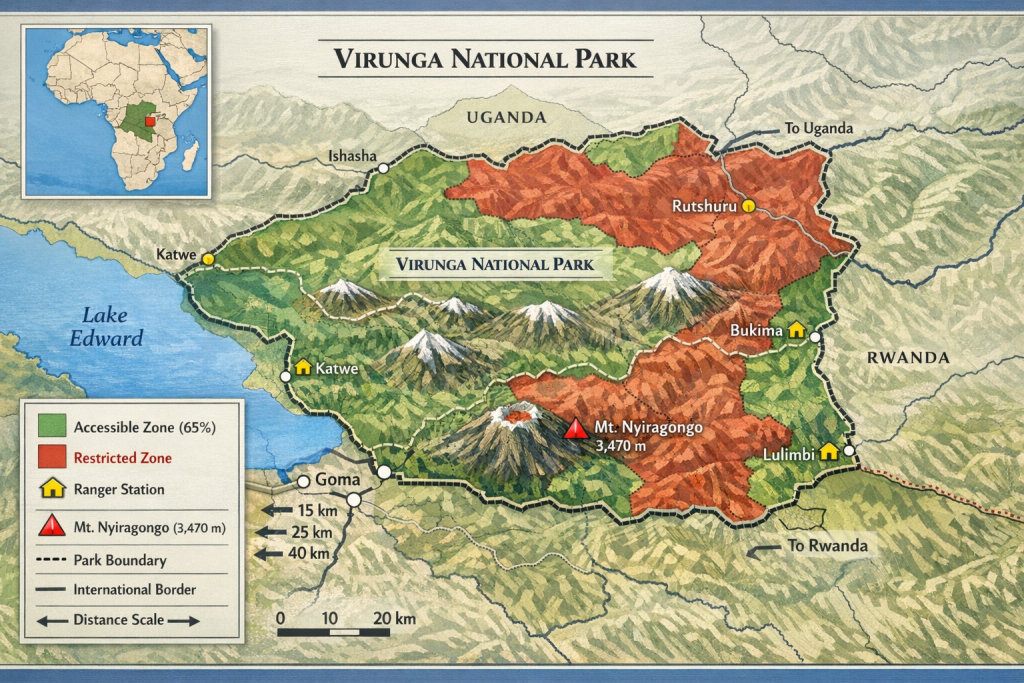
Virunga National Park DR Congo is a UNESCO World Heritage Site covering 7,800 square kilometers in North Kivu Province, protecting mountain gorillas, forest elephants, chimpanzees, and over 700 bird species. Park authorities regained control of 65% of the park’s territory in early 2026 following security operations, though most areas remain closed to independent tourists due to ongoing militia activity in the region. Limited gorilla trekking tours operate under strict security protocols for pre-booked group visitors, while Mount Nyiragongo volcano treks remain suspended pending safety assessments.
- Park authorities control 65% of Virunga National Park territory as of February 2026, with ongoing security operations in remaining areas.
- Gorilla trekking operates on limited basis with mandatory armed ranger escorts and advance booking through authorized operators only.
- Independent tourist access remains prohibited, with guided group tours expected to expand by late 2026.
- Mount Nyiragongo volcano trekking stays closed while Goma Volcano Observatory develops new warning systems and access routes.
- Twin mountain gorillas born in 2026 brought the Bageni family to 59 individuals, the largest gorilla family in the park.
Virunga National Park DR Congo operates as a managed conservation area in North Kivu Province with restricted visitor access in 2026. The park’s 700 rangers maintain anti-poaching patrols and wildlife monitoring across 65% of recovered territory, while security forces work to establish safe travel corridors for future tourism expansion. Visitors can access gorilla trekking through pre-arranged group packages with authorized operators, but must accept armed escort requirements, potential itinerary changes based on security assessments, and the reality that large sections of the park remain off-limits.
Location and Access to Virunga National Park DR Congo
Virunga National Park DR Congo sits in North Kivu Province along the borders with Uganda and Rwanda, extending from the Virunga volcanic mountains in the south to the Rwenzori Mountains in the north. The park headquarters operates from Rumangabo, 40 kilometers north of Goma city, which serves as the main access point for authorized visitors.
Road access from Goma to park entry points requires 4×4 vehicles and takes between 1.5 to 3 hours depending on destination and road conditions. The Congolese Institute for the Conservation of Nature (ICCN) coordinates all visitor movements with security forces to maintain safe travel routes.
International visitors typically fly into Kigali, Rwanda, then drive 4 to 5 hours to the Goma border crossing. Alternative routes from Kampala, Uganda take 8 to 10 hours but face frequent delays at border posts and security checkpoints.
Gorilla Trekking Tours in Virunga National Park

Gorilla trekking in Virunga National Park DR Congo operates with strict capacity limits and security requirements that differ from neighboring Rwanda and Uganda parks. The park manages 8 habituated mountain gorilla families, though only select groups receive visitor permits based on daily security assessments.
Trekking groups consist of maximum 6 visitors per gorilla family, accompanied by 2 armed rangers, 1 tracker, and additional security personnel. Trek duration ranges from 2 to 6 hours depending on gorilla location, with 1 hour allowed for observation once the family is located.
The Bageni family, now numbering 59 individuals after twin births in 2026, represents the largest habituated group but requires longer treks due to their range in higher elevation zones. Physical fitness requirements include ability to hike steep terrain at altitudes between 2,000 and 3,500 meters.
Permit costs and booking procedures operate through authorized tour operators only, as the park does not accept direct individual bookings. All visitors must provide passport copies, travel insurance documentation, and sign liability waivers acknowledging security risks.
Age restrictions set minimum at 15 years, with no exceptions granted. Health screening occurs at park headquarters before trek departure, with rangers authorized to refuse participation based on illness symptoms that could transmit to gorillas.
Current Security Conditions and Visitor Restrictions
Security conditions in Virunga National Park DR Congo improved in early 2026 when park authorities regained 65% of territory from militia groups, but significant restrictions remain in place. The park operates under a tiered access system where certain zones open for supervised tourism while others stay closed pending security clearance.
Independent tourists cannot enter the park under any circumstances. All visits require pre-arrangement through operators who maintain direct communication with ICCN security coordinators. Armed escort protocols apply to all visitor movements, including transfers between accommodation and trek starting points.
The park reserves the right to cancel or modify itineraries with minimal notice based on security intelligence. Visitors should expect potential changes to planned activities, alternative trek locations, or complete activity cancellations without compensation for permit costs.
Multi-national security forces collaborate with park rangers to patrol travel corridors and establish checkpoints along visitor routes. These operations continue throughout 2026 with the goal of expanding accessible areas for tourism by year end.
Wildlife and Conservation Status at Virunga National Park DR Congo
Virunga National Park DR Congo protects diverse ecosystems ranging from lowland rainforest to alpine vegetation above 5,000 meters. The park’s 700 rangers conduct daily patrols to monitor wildlife populations and prevent poaching despite operating in a conflict zone.
Mountain gorilla numbers show moderate growth due to continuous veterinary support from Gorilla Doctors and anti-poaching operations. The birth of twin mountain gorillas in January 2026 marked a rare event, with twins occurring in less than 1% of gorilla births.
Forest elephant populations face ongoing pressure from illegal ivory operations, though ranger patrols have reduced poaching incidents in recovered territories. Chimpanzee groups inhabit lowland forest zones that remain largely inaccessible to visitors in 2026.
The park records over 700 bird species across its elevation range, making it a priority site for ornithological research. Okapi populations in the northern sectors receive monitoring through camera trap networks, though visitor access to these areas stays prohibited.
Conservation funding comes from international NGO partnerships and donor organizations that support ranger salaries, equipment, and veterinary programs. The park maintains its UNESCO World Heritage Site status based on ongoing conservation efforts despite regional instability.
Mount Nyiragongo Volcano Trek Status

Mount Nyiragongo volcano trekking remains unavailable in 2026 as park management works with Goma Volcano Observatory scientists to develop improved warning systems and safer access routes. The volcano last erupted in May 2021, destroying parts of Goma and demonstrating the need for better monitoring infrastructure.
Previous trek routes to the summit crater at 3,470 meters require assessment for structural stability and evacuation procedures. The overnight summit camp that allowed visitors to view the lava lake needs complete reconstruction with emergency shelter capacity.
Park authorities have not announced a timeline for resuming Nyiragongo treks. Visitors planning Congo trips in 2026 should not include volcano trekking in their itineraries and should monitor official park announcements for future updates.
Accommodation Options Near Virunga National Park
Accommodation for Virunga National Park visitors operates through Mikeno Lodge, located within the park boundaries near gorilla trekking zones. The lodge provides the only authorized overnight option for tourists participating in park activities, with capacity limited to 12 guests in 6 rooms.
Facilities include basic amenities with solar power, limited hot water availability, and communal dining. The lodge operates under security protocols that restrict guest movement outside designated areas after dark.
Booking requires advance reservation through authorized tour operators who coordinate with park management. Independent accommodation bookings are not accepted. Rates include armed security, ranger guides, and coordination with ICCN authorities.
Alternative accommodation in Goma city serves as a base for visitors awaiting security clearance or dealing with itinerary changes. Hotels in Goma range from budget guesthouses to mid-range properties, though none offer the proximity to trekking zones that Mikeno Lodge provides.
Permits, Regulations and Visitor Requirements
Gorilla trekking permits for Virunga National Park DR Congo require booking minimum 3 months in advance through authorized operators. The park does not publish permit prices publicly, with costs varying based on operator packages and included services.
Visitor regulations include mandatory briefing sessions before treks, where rangers explain approach distances, photography restrictions, and behavior protocols around gorillas. The standard 7-meter distance rule applies, though gorillas may approach closer of their own choice.
Health requirements prohibit trekking for visitors with contagious illnesses including colds, flu, or gastrointestinal symptoms. Temperature checks and health declarations occur at park headquarters before trek departure.
Photography is permitted using cameras without flash. Video recording requires advance notification and may incur additional fees. Drone use is strictly prohibited throughout the park.
Visitors must carry valid passports, DRC tourist visas, and yellow fever vaccination certificates. Travel insurance with emergency evacuation coverage is mandatory, with proof required at booking.
Best Time for Virunga National Park Tours
The dry seasons from June to September and December to February provide optimal conditions for gorilla trekking in Virunga National Park DR Congo. Reduced rainfall during these months makes forest trails less muddy and improves hiking conditions on steep terrain.
The wet seasons from March to May and October to November bring heavy rainfall that can make trails impassable and increase trek difficulty. Rain gear remains necessary year-round, as weather patterns at higher elevations produce afternoon precipitation even in dry months.
Temperature ranges from 10°C to 25°C depending on elevation, with summit zones dropping to near freezing at night. Visitors should pack layered clothing suitable for both warm valley zones and cold mountain conditions.
Security conditions affect seasonal access more than weather patterns. Park authorities may restrict tourism during periods of increased militia activity regardless of optimal trekking weather.
Tour Operators and Booking Process
Authorized tour operators for Virunga National Park DR Congo maintain direct relationships with ICCN and coordinate all aspects of visitor logistics including permits, security clearance, accommodation, and ground transport. Visitors cannot book park access independently.
Operators require full payment or substantial deposits months before travel dates, with cancellation policies reflecting the security risks inherent in Congo travel. Most operators offer no refunds for cancellations due to security conditions, though some provide credit toward future trips.
Package itineraries typically span 3 to 4 days including border transfers from Rwanda, gorilla trekking, and buffer days for potential security delays. Operators build flexibility into schedules to accommodate last-minute changes directed by park authorities.
Communication with operators during trips may be limited due to unreliable mobile networks and internet connectivity in park zones. Visitors should expect periods without contact with outside parties.
Virunga National Park Ranger Force and Conservation Efforts
The park employs 700 rangers who conduct anti-poaching patrols, wildlife monitoring, and visitor protection operations across accessible territories. Rangers work in teams with rotation schedules that keep patrol units in the field for extended periods.
Ranger training includes weapons handling, wildlife tracking, first aid, and visitor management protocols. The force has sustained casualties from militia attacks, with ongoing recruitment to maintain operational capacity.
Conservation programs include veterinary interventions for injured or sick gorillas, habitat restoration in degraded zones, and community outreach in villages bordering the park. Gorilla Doctors provide medical support through regular monitoring visits and emergency response for health threats.
Anti-poaching operations focus on protecting elephants from ivory trafficking and preventing bushmeat hunting that threatens multiple species. Rangers confiscate snares, track poaching networks, and coordinate with law enforcement on prosecutions.
International funding supports ranger salaries, equipment procurement, and infrastructure maintenance. Conservation NGOs partner with ICCN to provide technical expertise and coordinate research programs.
Frequently Asked Questions About Virunga National Park DR Congo
Can tourists visit Virunga National Park in 2026?
Limited tourist access operates through authorized group tours with advance booking and armed escort requirements. Independent visitors cannot enter the park. Gorilla trekking functions on restricted basis while most park areas remain closed.
Is Virunga National Park safe for gorilla trekking?
Security risks persist despite improved conditions in 65% of recovered territory. All treks include armed ranger protection, but visitors must accept potential dangers from militia activity and sign liability waivers.
How much do Virunga gorilla permits cost?
Permit prices are not published publicly and vary by tour operator package. Costs typically exceed Rwanda and Uganda permit fees due to security requirements and limited capacity. Contact authorized operators for current rates.
When will Mount Nyiragongo reopen for trekking?
No reopening date has been announced for Nyiragongo volcano treks. Park management continues working with volcano observatory scientists on safety systems and access routes.
How many mountain gorillas live in Virunga National Park?
The park protects 8 habituated gorilla families with populations monitored by rangers and Gorilla Doctors. The Bageni family reached 59 individuals in 2026 after twin births, making it the largest group.
What is the minimum age for gorilla trekking at Virunga?
Minimum age is 15 years with no exceptions. All participants must meet physical fitness requirements for steep terrain hiking at elevations between 2,000 and 3,500 meters.
Can I book Virunga permits directly with the park?
No. All bookings require authorized tour operators who coordinate with ICCN. The park does not accept direct individual permit applications or accommodation reservations.
What vaccinations are required for Virunga National Park?
Yellow fever vaccination is mandatory with certificate required at entry. Visitors should consult travel health providers for recommendations on typhoid, hepatitis A, hepatitis B, and malaria prophylaxis.
How long does gorilla trekking take at Virunga?
Trek duration ranges from 2 to 6 hours depending on gorilla family location. Visitors spend 1 hour with gorillas once located. Total excursion time including briefings and return hike spans 4 to 8 hours.
What should I pack for Virunga National Park tours?
Waterproof hiking boots, rain jacket, long pants, long sleeves, gardening gloves for vegetation, daypack, water bottles, snacks, and camera equipment. Accommodation provides limited laundry service with slow drying times in humid conditions.
Are there other activities besides gorilla trekking?
Current visitor access limits activities to gorilla trekking only. Bird watching, chimpanzee tracking, and volcano treks remain unavailable pending security improvements and infrastructure development.
How do I get to Virunga National Park from Kigali?
Authorized operators arrange ground transport from Kigali to Goma border crossing, then to park headquarters. Journey takes 4 to 5 hours with border formalities. Independent travel to the park is prohibited.
Key Takeaways
Virunga National Park DR Congo operates as a managed conservation area with limited tourist access in 2026, following recovery of 65% of park territory by authorities.
Gorilla trekking functions through authorized operators only, with mandatory armed escorts, advance booking requirements, and acceptance of security-related itinerary changes.
The park’s 700 rangers maintain anti-poaching operations and wildlife monitoring despite regional instability, protecting mountain gorillas, forest elephants, chimpanzees, and over 700 bird species.
Mount Nyiragongo volcano treks remain suspended while park management develops improved safety systems and access routes with volcano observatory scientist.
Twin mountain gorilla births in 2026 increased the Bageni family to 59 individuals, representing the largest habituated gorilla group in the park.
Security conditions continue to affect visitor access, with park authorities working toward expanded tourism operations by late 2026 as stability improves in recovered zones.
Visitors must book through authorized operators who coordinate all logistics, provide required documentation, and maintain communication with ICCN security coordinators throughout trips.
Physical fitness requirements for gorilla trekking include ability to hike steep terrain at elevations between 2,000 and 3,500 meters for up to 6 hours.
The park maintains UNESCO World Heritage Site status based on ongoing conservation efforts supported by international NGO partnerships and donor funding.
All tourism operates under protocols that prioritize gorilla health and safety, including health screening, distance regulations, and group size limits of 6 visitors per trek.
Conclusion
Virunga National Park DR Congo continues conservation operations in 2026 with gradual tourism recovery following improved security conditions. Visitors who choose to trek mountain gorillas in the park should work with experienced operators, maintain realistic expectations about access limitations, and prepare for the physical demands of high-altitude forest hiking. The park’s ranger force and international conservation partners work to protect wildlife populations while developing safer conditions for future tourism expansion.